Logo

Ski the midnight sun

Trip Image

Duration

8 days

calendar

Months

Apr, May

level

Trip level

3/5

Svalbard Ski & Sail

Arctic Ski Touring from a Small Expedition Vessel | 8-12 Guests

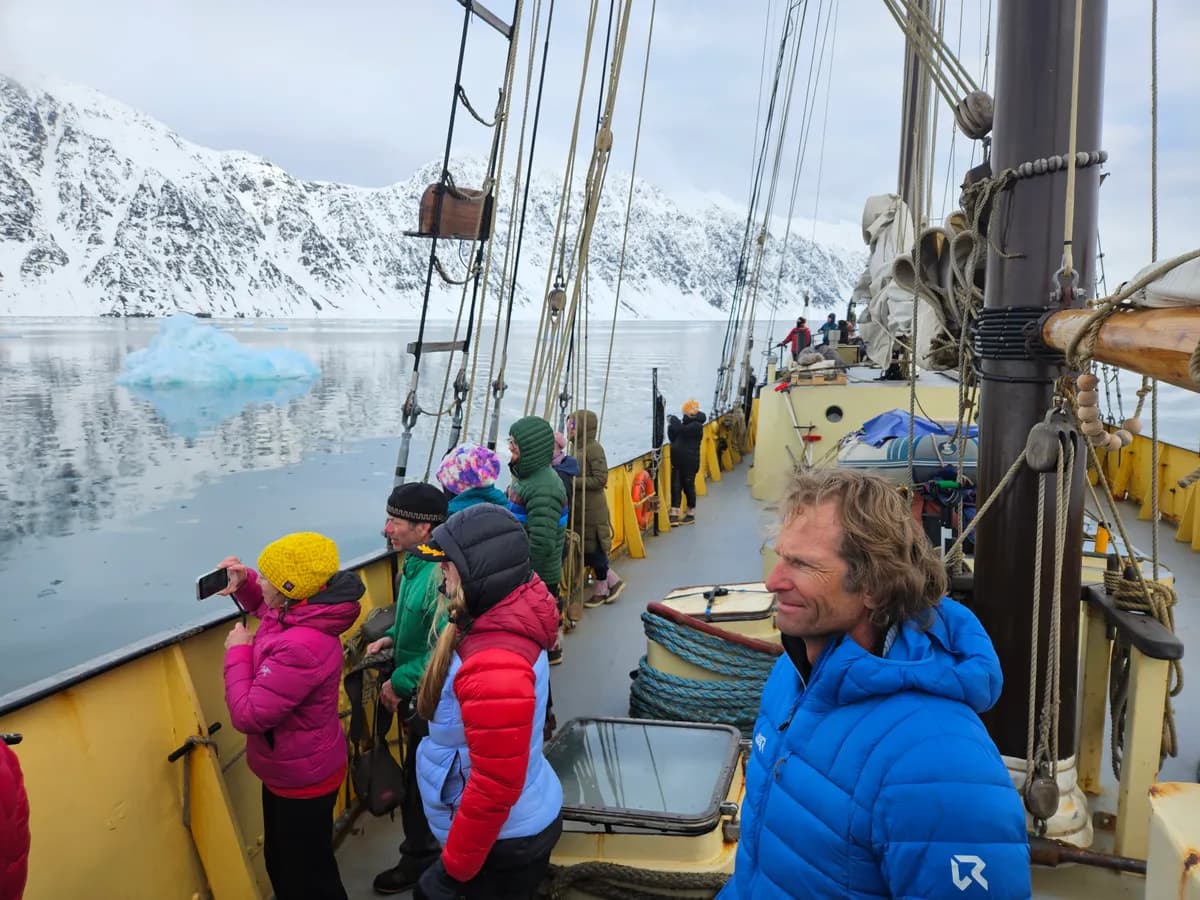
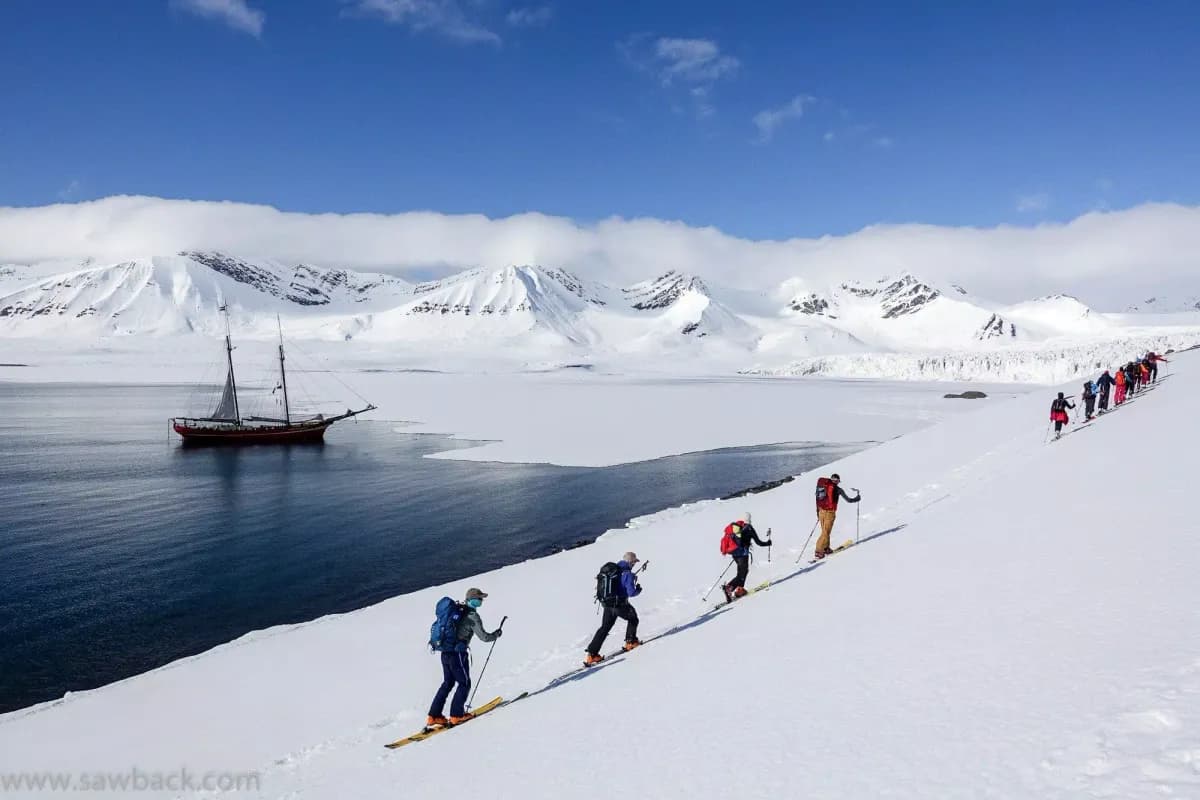
A ski touring and sailing expedition along the west coast of Spitsbergen, in the high Arctic between mainland Norway and the North Pole.

The Svalbard archipelago consists of more than 60 largely uninhabited islands in the high Arctic, at over 78° north—level with Ellesmere Island and northern Greenland.

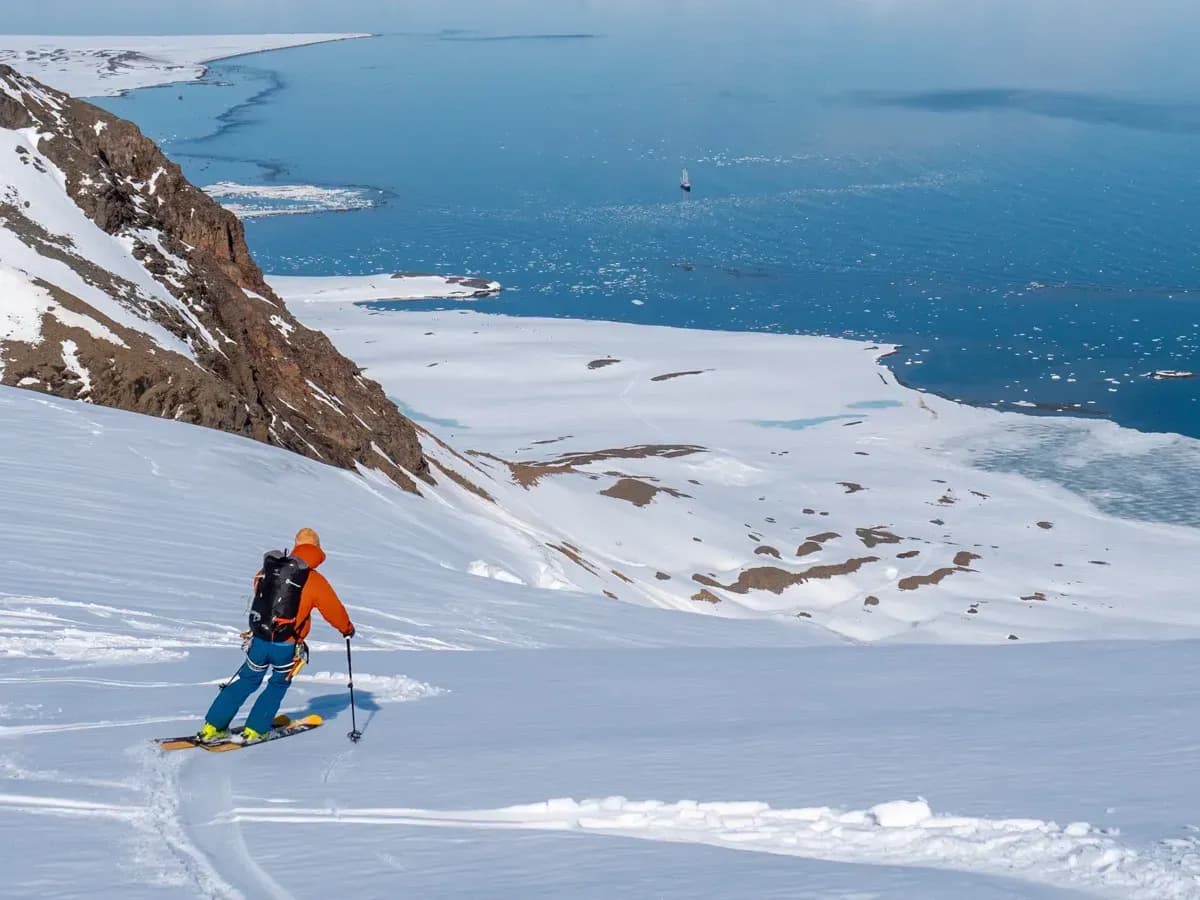
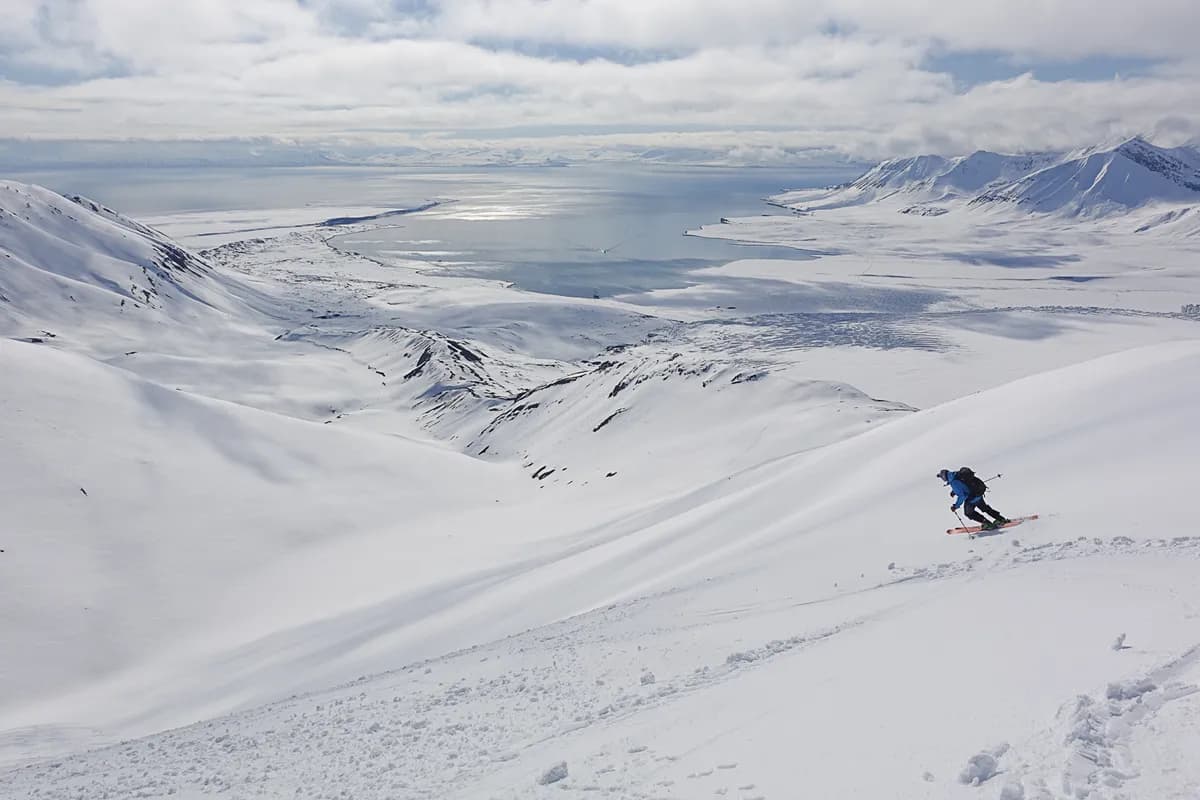
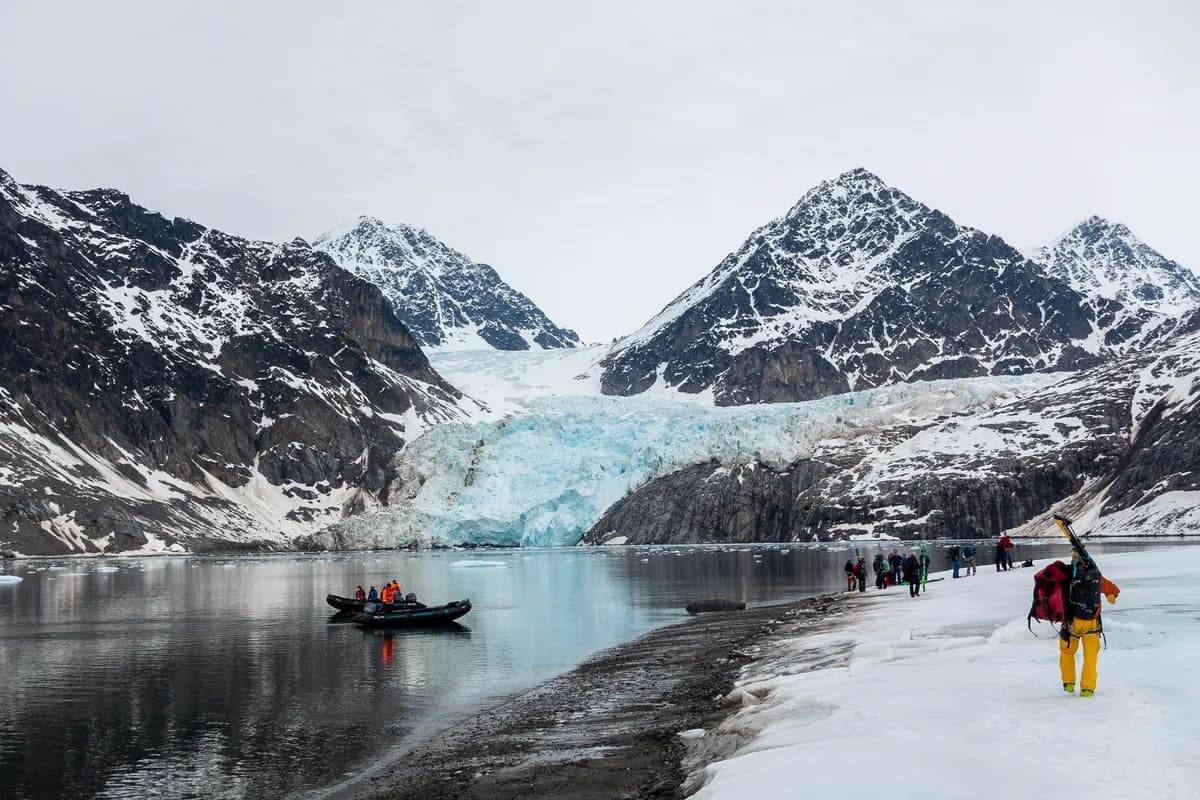
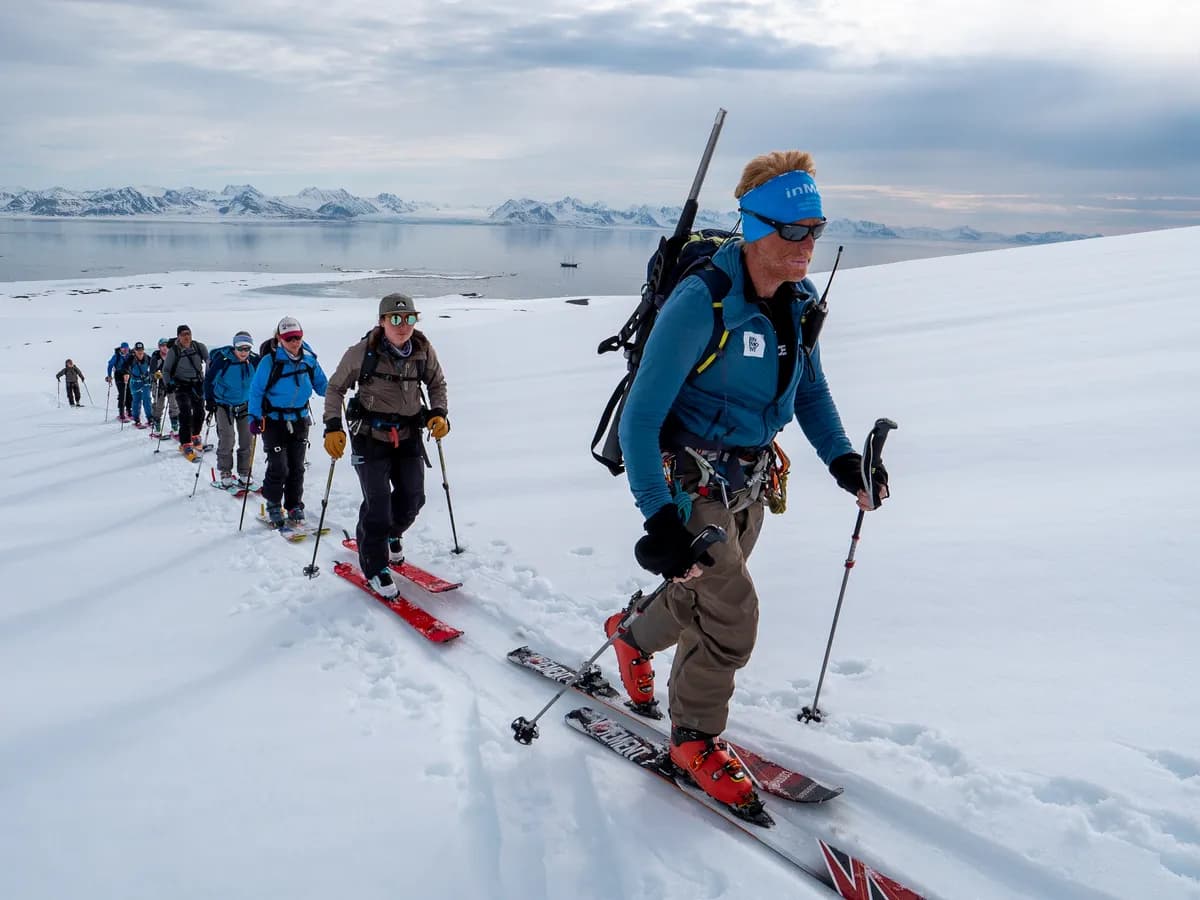
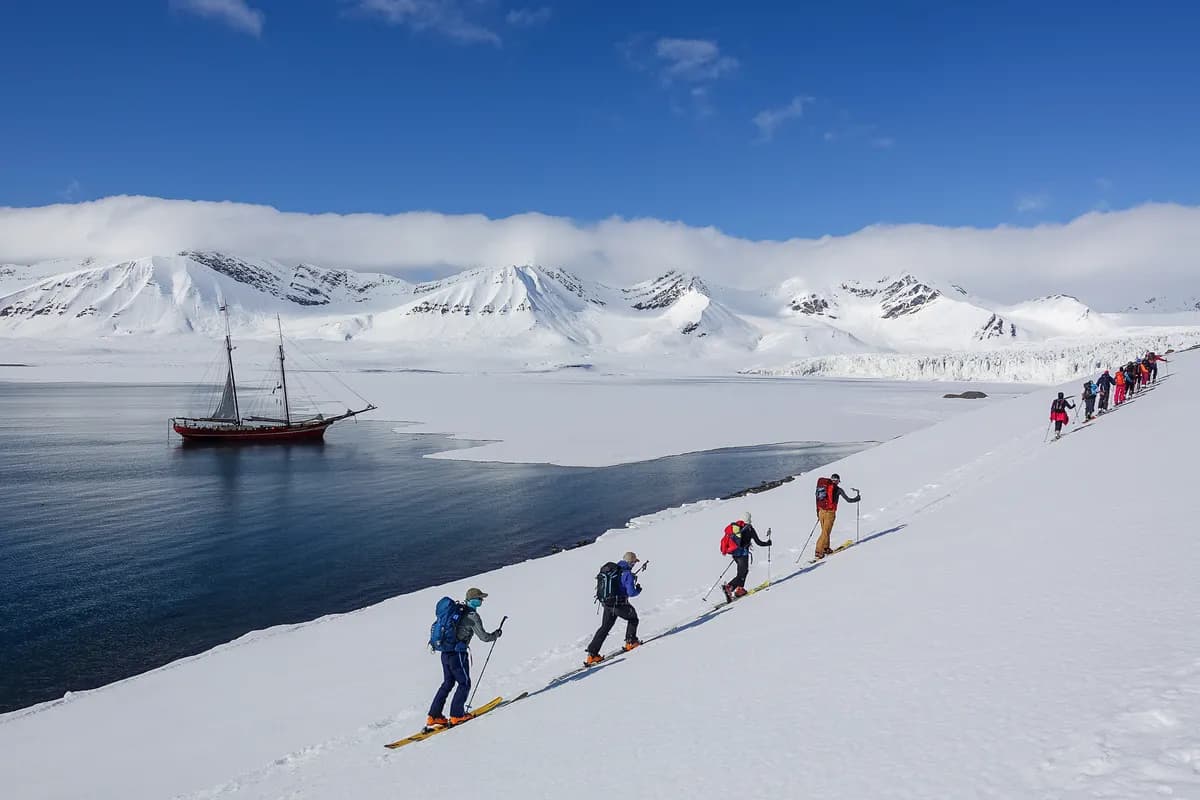
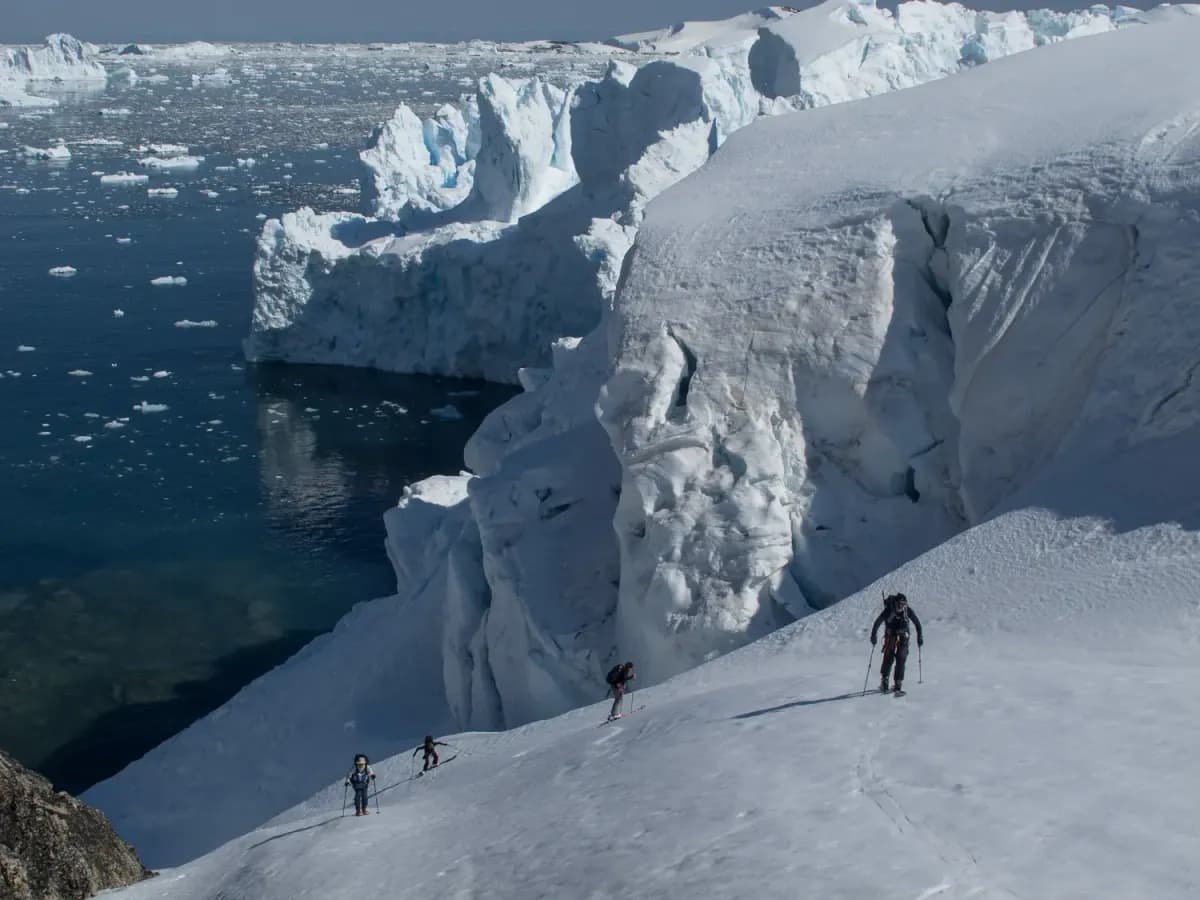
Skiing here is defined by its setting: steep mountains rising directly from the sea, accessed by small boat and zodiac. Each day is shaped by weather, sea ice, and conditions, with the flexibility to move between fjords and choose objectives accordingly.

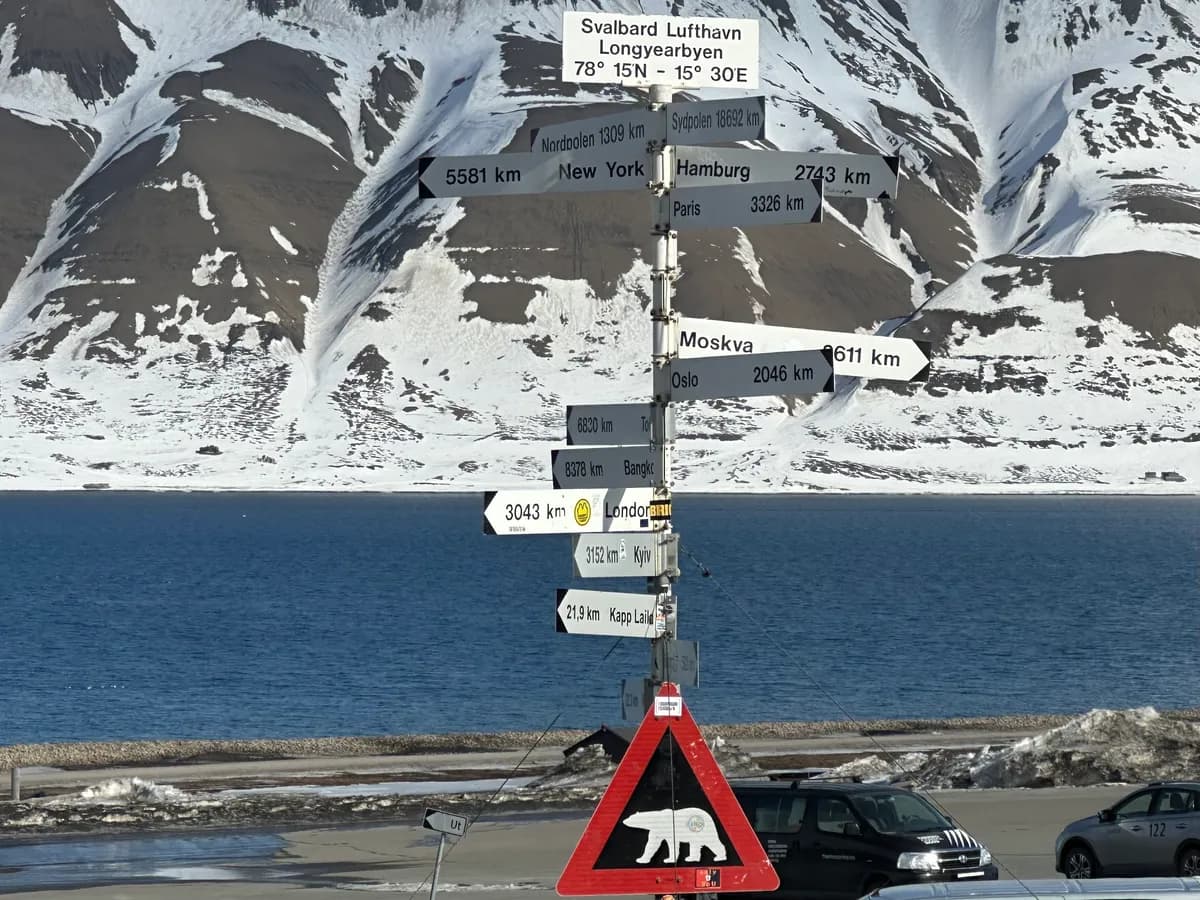
Despite its latitude, Svalbard is straightforward to reach, with regular flights into Longyearbyen and a short transfer to the harbour.

Expedition Vessels

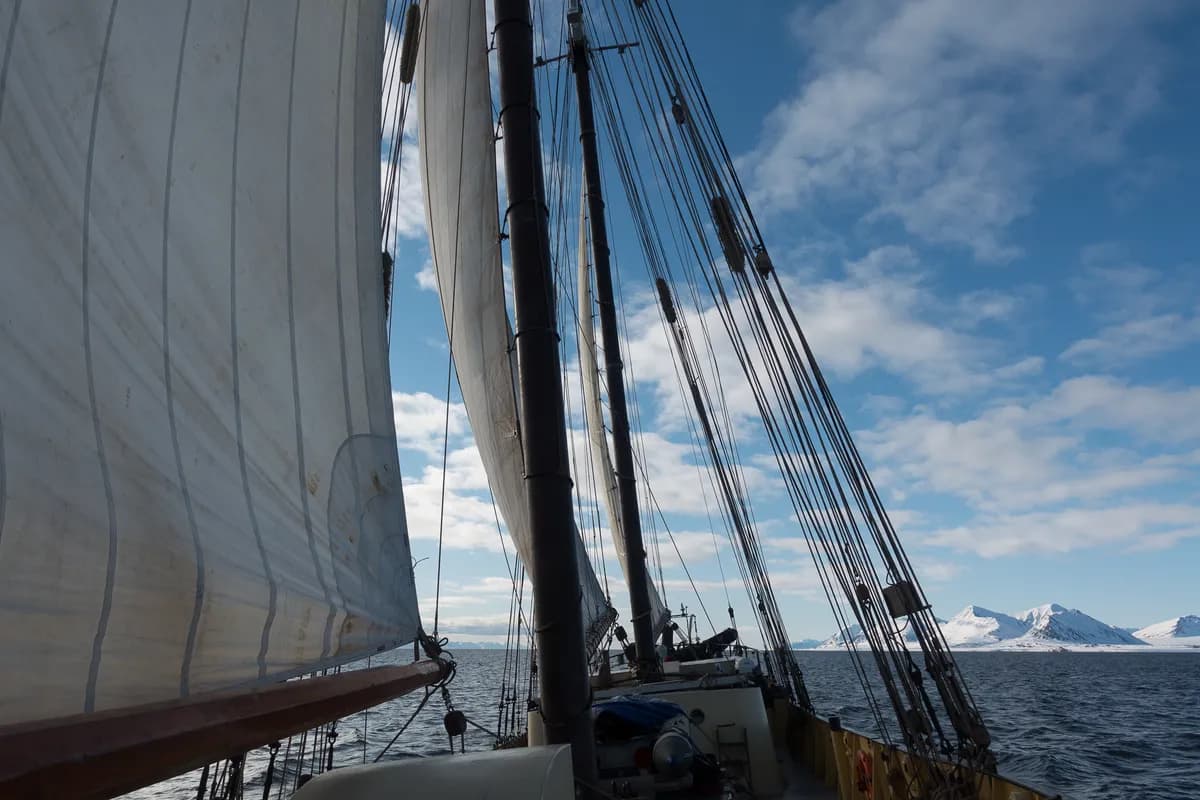
We operate on three distinct sailing vessels in Svalbard: Noorderlicht, Meander, and Rembrandt van Rijn, each offering a different balance of space, comfort, and expedition style.

  • Noorderlicht — 12 guests; classic schooner with exceptional space per guest and a traditional expedition atmosphere
  • Meander — 10–12 guests; compact, efficient platform with strong logistics and modern systems and amenities
  • Rembrandt van Rijn — up to 29 guests; larger vessel with private cabins and a more comfortable onboard experience

Learn more about the vessels by clicking the Accommodation tab above

Tour Image
Tour Image
Tour Image
Tour Image
Tour Image
Tour Image
Tour Image
Tour Image
Tour Image
Tour Image
Tour Image
Tour Image

locationMeeting place and time

Longyearbyen, Svalbard

planePlace and time of the end of the trip

Longyearbyen, Svalbard

Included

checked7 nights two mast sailboat rental with crew

checkedharbour fees

checkedpermit fees

checkedUIAGM / IFMGA mountain guides

checkedfull board meals on ship

checkedbreakfast on pre-sail

Excluded

canceledair travel

canceledalcoholic beverages

canceledlunches and dinners in Longyearbyen

canceledgratuities

canceledtrip cancellation and evacuation insurance

bootsEquipment

PACKING NOTES

Click here for a visual ski touring checklist.

Boots: if you carry anything onto the airplane on your way to Norway make it your boots. Many other items can be replaced at the last minute, but not boots.

Ski crampons are a must for spring ski touring on Svalbard. They are specific to your binding type. Order well in advance as this is something that’s often not available at the last minute. If you can’t find a crampon to fit your binding, G3 crampons have an attachment system that works for many bindings. Again, do this well in advance of the trip.

There are currently limited ski touring rentals on Svalbard but no boot rentals are available. Contact Sportcenteret well in advance to arrange for rentals. Please be aware of the risks of counting on rental gear being available in this remote Arctic location. Sawback does rent ski gear with advanced notice. If you need to rent from us the fee is $550 CAD for this trip, and you must sign a rental waiver. In any event it is highly recommended you bring your own equipment and that you make sure it is in top condition. The Greenland sea is not a great place to go shopping for new gear after breaking your ski in half!

Norwegian Kroner — please do not bother exchanging for Norwegian cash (krone aka NOK). You will be very hard pressed to figure out a way to spend it on Svalbard as no merchants (except for one) want it and accept only cards. If you give it staff or crew as a tip at the end of the week (after you realized you didn’t have any way to spend it) then you’ve left them with the same problem. Canadian guides prefer tips in CAD, USD or EUR; American guides are happy with USD or EUR; Euro guides and ship’s crew strongly prefer EUR over any other currency.

You need to bring all of the following personal equipment. Please don’t bring extra equipment as storage space on the boat, and especially in the cabins, is very limited. If you have any questions at all about gear please do not hesitate to contact us.

CLOTHING

There are no laundry facilities available on the Noorderlicht so please bring enough clothing to last the week.

  • Wool or synthetic socks and liner socks
  • Long underwear top – synthetic or wool
  • Light fleece or wool sweater
  • Wind shell – nylon or ‘Schoeller’ type jacket
  • Waterproof breathable jacket
  • Warm insulated jacket – down or synthetic
  • Long underwear bottoms – synthetic or wool
  • Multipurpose stretch nylon or ‘Schoeller’ type pants
  • Waterproof breathable pants
  • Warm hat – wool or synthetic
  • Brimmed cap for sun protection
  • Face warmer – scarf, neck tube or balaclava (optional)
  • Light gloves – wool, synthetic or leather
  • Insulated gloves or mitts with waterproof outer shell
  • Spare gloves or mitts
  • Handkerchief for blocking the sun (optional)

SNOW SAFETY EQUIPMENT

  • Avalanche beacon with good batteries (and spares)
  • Shovel
  • Probe (2.4m or longer preferred)

Travel Equipment

  • Skis or split board
  • Ski strap
  • Ski or snowboard boots
  • Poles
  • Climbing skins
  • Skin wax (or a simple wax candle) — pre-treat your skins ahead of time and bring extra skin wax. Spray-on wax or liquid wax (non-fluro!!) is a great idea too for field treatments.
  • Ski crampons (mandatory)
  • Boot crampons and lightweight ice axe (optional; don’t bring these if you don’t have them or don’t like steep skiing)
  • Binding repair kit to fix your personal travel setup
  • Ski helmet
  • Ski scraper

Personal Equipment

  • Ski pack (30-40 litres)
  • Sunglasses: both light (yellow/orange) and dark (orange/golden/brown) lenses help a lot for travel in all conditions
  • Goggles (yellow/orange lenses)
  • Sunscreen and lip cream (SPF 30+)
  • Head lamp with good batteries
  • Insulated water bottle or thermos (1-2 L)
  • Lunch bag or container
  • Personal blister kit (i.e: Leukotape-P and Compeed, blister pads). Be sure to pre-tape problem spots on your feet with Leukotape, prevention is the best medicine!
  • Tincture of Benzoin (see this how-to for an explanation) or a medical product by 3M called Cavilon — these products help the Leukotape stick for the whole week if necessary.
  • Pocket knife (optional)
  • Camera (optional)
  • Binoculars (optional)
  • Eye mask (strongly recommended for sleeping due to 24-hour daylight)
  • Utility cord for hanging stuff to dry (very hepful for hanging personal items in your cabin)

Glacier Gear

  • Harness – fitted for over your ski clothing
  • Locking carabiners (x2)
  • Non-locking carabiners (x2)
  • Prussik cord – 5m x 6mm (optional)
  • Sewn sling – 120cm (optional)

On the Sailing Boat & at the Hotel

  • Small soft-sided duffle bag (30-50 L) to contain your clothes in your berth
  • Shoes
  • Winter boots for wearing around town
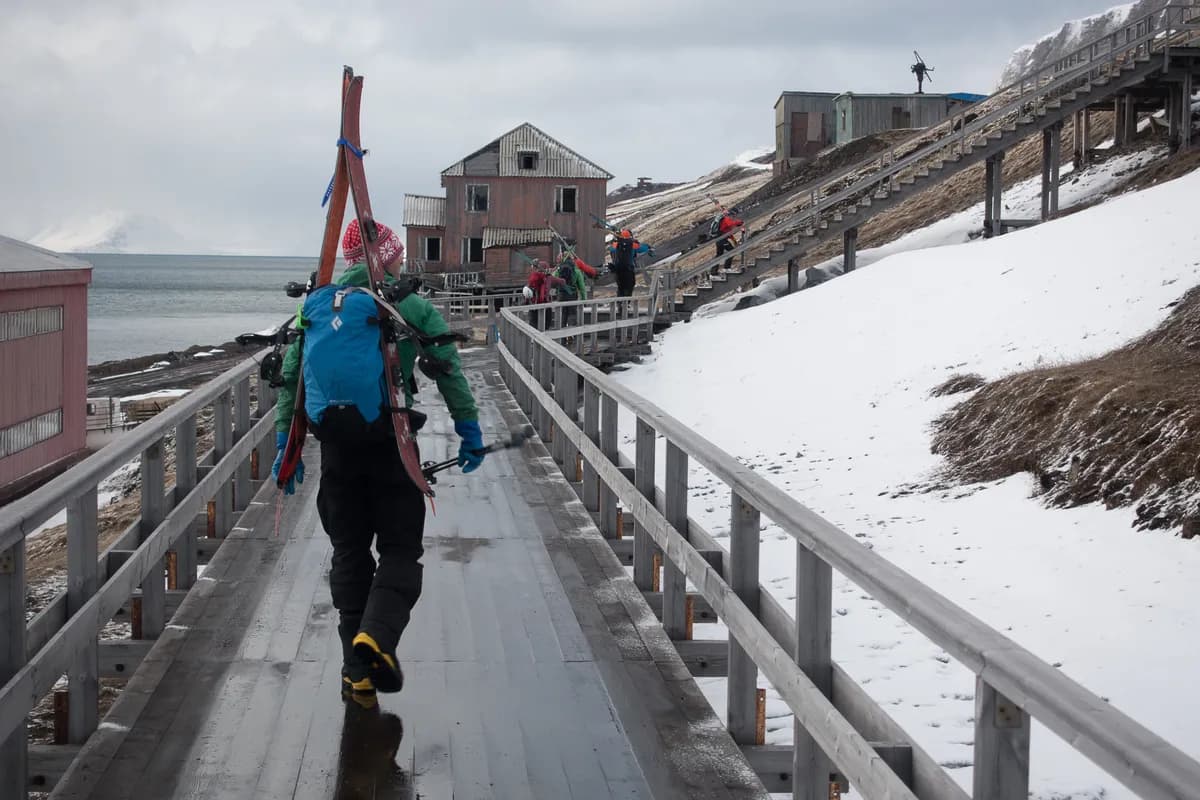
  • Micro-spikes — especially the early season (late April / early May) trips as melt-freeze cycles can create very slippery conditions in the town
  • Slippers
  • High rubber boots for entering/exiting the dinghy (optional; the vast majority of exits/entries do not require this and we can always get by without)
  • Comfortable clothing
  • Personal medications and toiletries (including small-sized soap and shampoo)
  • Ear plugs
  • Reading material
  • Chargers & adapters for electronic devices (normal AC power is available as 220V Euro plug)
  • Cash in Euros to pay for your beer tab, souvenirs, and tips/gratuities (for both hotel and boat crew)

Note the following are provided:

  • Beer and wine are available to purchase on the boat at a reasonable price. If you choose to bring your own you must declare it to the crew when you board. A corkage fee will apply (approx. 15 EUR per bottle of wine for reference). Please do not bring any hard alcohol and be modest with quantities — this is an expedition, not a party, with crew who work hard and keep long hours.
  • Pillows, duvets, bed linen and towels supplied on the boat (& hotel)

Group Gear (supplied by the guides)

  • Altimeter
  • Map and compass
  • GPS
  • Snow study kit
  • Snow and/or bush saw
  • First aid kit
  • Emergency tarp
  • Emergency toboggan
  • Group repair kit
  • Radio & satellite communications devices
  • Ropes for glacier travel

Our Svalbard Vessels

For our Svalbard ski and sail expeditions, we operate on three distinct sailing vessels: Noorderlicht, Meander, and Rembrandt van Rijn. Each offers a different balance of space, comfort, group size, and expedition style.

Noorderlicht | Classic Arctic Schooner | 12 Guests

Built in 1910, Noorderlicht is a 46.2 m schooner and one of the most distinctive ski-and-sail vessels in Svalbard. She now operates with just 12 guests, creating exceptional space onboard relative to her size and allowing for single cabin upgrade options.

  • Most space per guest
  • Classic expedition feel
  • Shared bathroom and shower facilities
  • Strong group cohesion with a small team onboard

Best suited to those who value atmosphere, space, and a traditional expedition experience.


Meander | Small Expedition Schooner | 10–12 Guests

Meander is a 30 m two-masted staysail schooner built in 1946 and refitted for Arctic expedition sailing. She is compact, efficient, and purpose-built for small-group operations.

  • 10–12 guests with a strong crew
  • Two primary zodiacs (+ backup) with higher-powered outboards
  • Efficient loading and shore access systems
  • Sauna onboard
  • Battery system allows quiet nights without generator use
  • en suite bathroom upgrades available

Best suited to those who prioritize efficient skiing, smooth logistics, and a high-functioning platform.


Rembrandt van Rijn | Larger Expedition Vessel | Up to 33 Guests

Rembrandt van Rijn is a 49.5 m three-masted schooner originally built in 1924 and refitted for expedition cruising. She offers more space, private cabins, and a higher level of onboard comfort.

  • Private ensuite bathroom in all cabins
  • Larger porthole cabins upgrades available
  • Larger common areas and more onboard amenities
  • Multiple zodiacs
  • Higher guest count and more structured operations

Best suited to those who prefer private accommodation and a more comfortable, ship-based experience.

Accommodation image
Accommodation image
Accommodation image
Accommodation image
Accommodation image
Accommodation image

Program

Day 1 (optional)

Arrival at the airport in Longyearbyen from Oslo (with SAS or Norwegian Airlines) in the early afternoon (usually one overnight required in Oslo). Transfer to our Hotel and time to check out the town including a visit to the “Polarmuseum”.

Day 2-3 (optional)

Ski touring day trips close to town and return to our hotel

Day 4

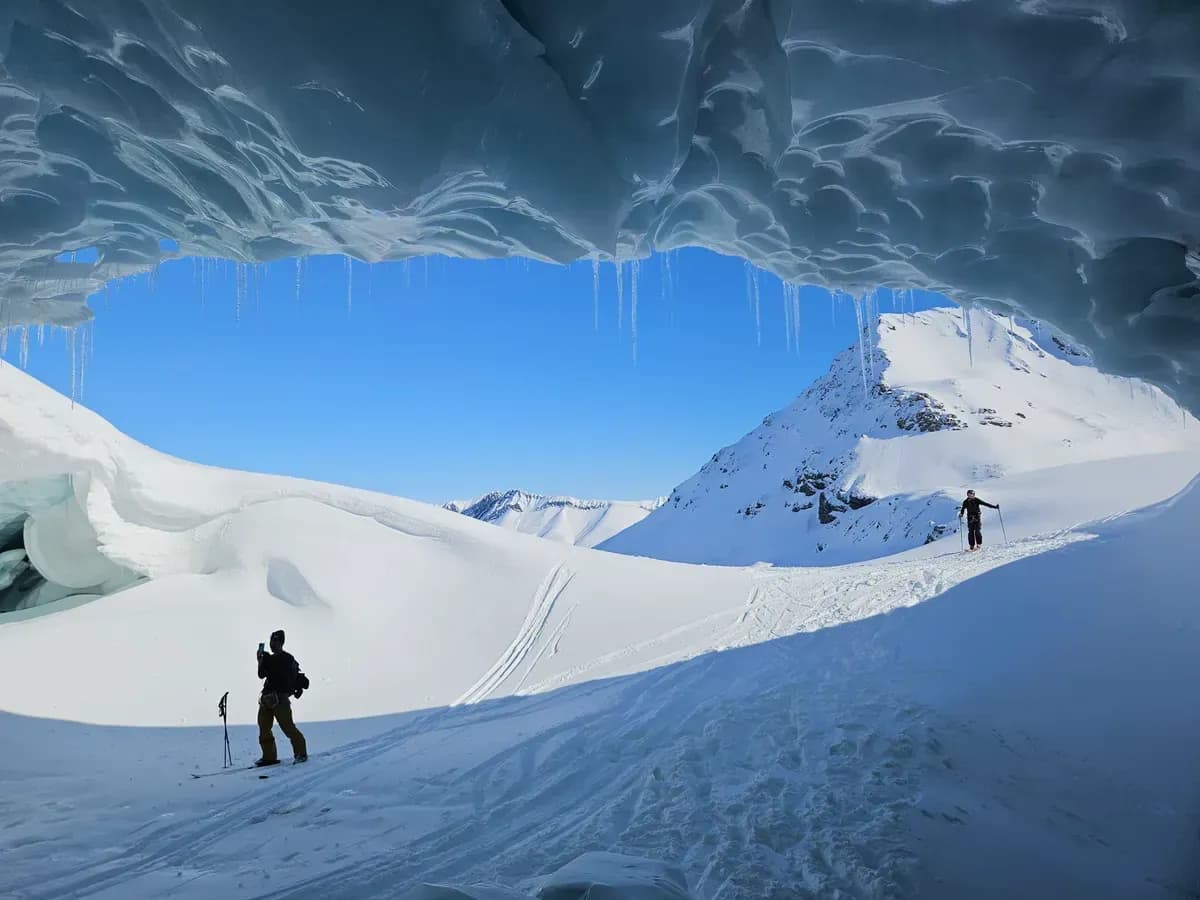
Potentially another shorter ski touring trip from town or a visit to an ice cave (4 hrs). Arrival day for those participants who chose to participate in the boat trip only. Embarkation is at 16:00, followed by a quick safety briefing. Departure from pier usually around 17:00.

Day 5 – 10

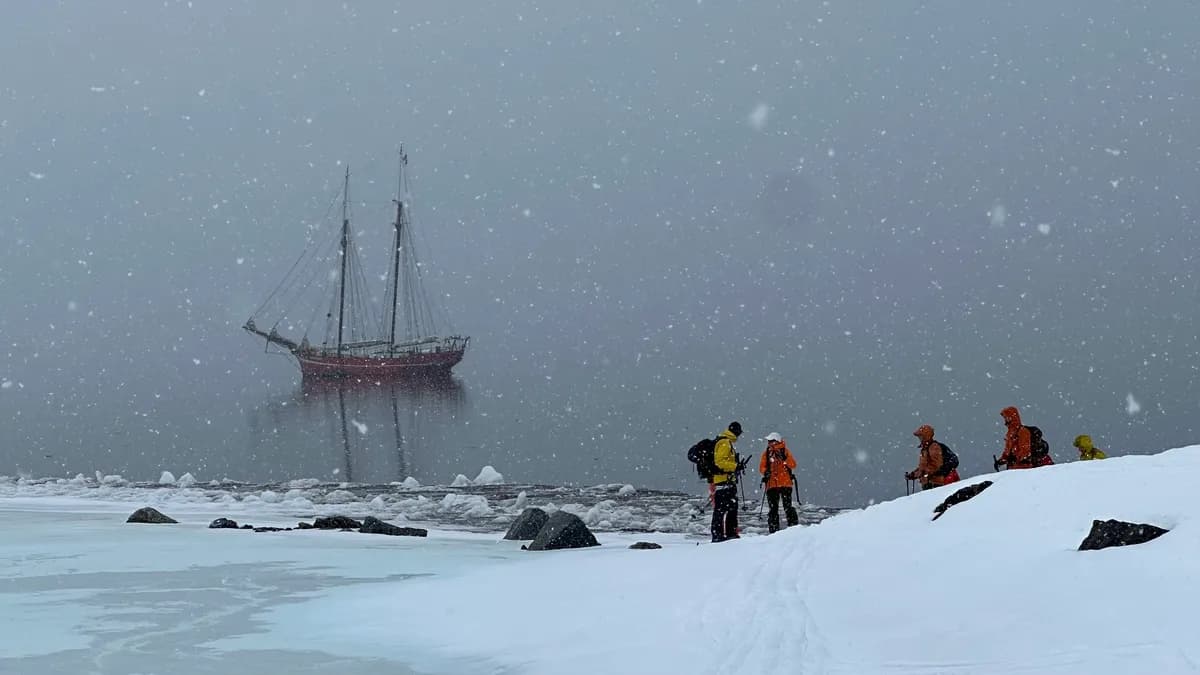
We usually only sail one hour to our first ski tour in the Isfjord; harbours like Ymerbukta or Tryghamna. From there, we continue to sail along the West Coast of Spitzbergen to sample the best ski touring and peak ascent the group of islands has to offer. In May and June the sun will be with us for 24 hours in Svalbard, which leaves a lot of flexibility for our departures. After each day of skiing we return from the shoreline by Zodiak motor boat back to our Yacht, where the smell of dinner will usually welcome us. We usually finish the day on deck with a glass of wine, enjoying the contrast of the sea and the magnificent mountainscape with the everlasting sun above the horizon.

Arrival back in Longyearbyen usually around 4 PM. Farewell dinner on the boat.

Day 11

We bid farewell to our yacht and crew in the morning. Disembarkation is after a final breakfast onboard, at 09:00 after settling bar tabs and gratuities. You will need to arrange transfers to a hotel or to the airport, depending on your destination post-trip, by taxi or bus.

What if my luggage gets lost en route to Svalbard?

These days lost baggage seems to be part of the airlines’ business model. While rare, it does happen to one or two guests each season. Here’s a couple of tips to reduce the chances your bags will be delayed:

  1. Skis are most likely to arrive on time if they are packed in smaller sized ski bags without additional items. Additional items with your skis increases the chances of the bag getting searched and delayed.
  2. Smaller, soft sided baggage (e.g. duffels) seems to be more likely to make it on time.

And here are a few tips to help minimize the consequences of lost baggage:

  1. Bring your boots as carry-on. Seriously, one day you will be very glad you did. Rental boots are no substitute for your own boots.
  2. Bring your daypack filled with your ski clothing and beacon. Your shovel and probe can go in your checked baggage as this is stuff that’s easy enough to rent in Svalbard.
  3. Make sure you have travel insurance that will cover the cost of additional rentals and clothing purchases in the event of delayed or lost baggage.

If you do end up in Longyearbyen without one or more of your bags, you’ll obviously need to come up with replacements. SportCenteret, located in Longyearbyen, has a small selection of excellent rental touring skis. And there are many shops that sell high quality outdoor clothing.

Is there Laundry on the boat? Sink for Socks and underwear?

There is no laundry available on the boat so bring lots of extra socks and underwear. There are sinks and showers you could use in a pinch.

How much personal and storage space is there on the boat?

There is room for storing extra stuff in a hold on the boat. Cabins are double occupancy and are also quite small for storing extra gear. Bring small duffels (50-70L max) to make sure they fit under the bunks.

Ski bags, gear and luggage that you will not need during the sailing expedition may be stored on shore in a locked container.

What are some tips on travelling on the airlines?
  • I seldom have issues with skis getting delayed but in the hundreds of clients we deal with each year it does happen occasionally and it's one of the reasons I try to travel with 2 extra pairs of touring skis whenever I travel (165 + 178 cm usually).

  • I would definitely carry on your ski boots -- no question there. If those go missing you'll be sorry.

  • I find boots fit surprisingly well into a ski bag. Or just carry them as your "personal item" -- yes they're oversized but I've never been called on it. If they say they're too big you could always wear them after all!

  • Tell the check-in agent that one of your bags is "ski equipment" and the other bag is "skis". They will often allow you to check an extra bag that accompanies ski equipment for free. Remind them if they aren't familiar with this policy and they'll look it up.

  • I wouldn't bother carrying on the probe and shovel, these are easily rented and could cause problems.

Are airport transfers available?

Transfers are not included in the trip fee. This is because guests arrive at different times and dates and also because there's a great public service available.

Convenient bus airport transfers bring you from the airport to the hotel and also pick up at the hotels before flights. They are waiting directly outside the airport after every flight arrival. LYR is about 4 km from town, so about 7 minutes by taxi and 10-15 minutes by bus depending on hotel (less than 10 minutes from Mary Ann’s where we’re staying). Cost is about 100 NOK pp for a return ticket (170 NOK for return tickets). You can also hire a taxi which costs about 200-300 NOK each way for a minvan. Don’t worry — the bus is comfortable and extremely convenient with lots of room for passengers, baggage and skis! Did we mention it’s 4 km and less than 10 minutes?

At the end of the trip you can take the same shuttle bus back to the airport. However, we recommend you coordinate a taxi with other guests who are on the same homeward flight with you. Reservations are strongly recommended. The options are Longyearbyen Taxi: +47 79 02 13 75 and Svalbard Bus and Taxi: +47 79 02 13 05

Will covid cause problems with travel?

We operated our 2022, 2023 and 2024 trips with no significant issues and anticipate the same in 2025 and beyond. Currently there are no restrictions for traveling due to Covid. Sawback does, however, have a Sickness Policy. Please be sure to read it carefully.

Please bring a mask with you on the plane. We strongly recommend using it for your air travel — especially if you are seated next to someone who’s hacking and coughing. You really don’t want to arrive sick for this trip.

Should we bring an ice ax?

Ice ax and boot crampon use is not part of our regular program. If you are coming with a group that is motivated to do steeper lines then boot crampons and an ice axe is an idea. But I don’t want to tell you to bring them and have you disappointed if we don’t use them. I have never had the need (and don’t list them on the equipment list for Svalbard), but once or twice I’ve had to modify our route where boot crampons would have made a difference. I think you can discuss this as a group — we will have a great week of skiing without the spiky things, but they could potentially open up possibilities. Feel free to contact us if your group is in this category.

What will the snow and weather be like?

Mid April to May 25 is the season for Svalbard Ski and Sail trips. The temperatures are mild and stable, with lows typically around -5°C and highs around +2°C. We have seen lows as cold as -15 in April and highs up to +8 in late May so come prepared for a wide range of conditions.

The snowpack is typically stable and snow surfaces are pretty variable. Skiing of the spring corn variety can be found, as can crusts of all descriptions and what we call “Arctic Pow” (faceted snow that is fun to ski). The weather is typically dry (good for skiing on the treeless landscape!) but true powder snow comes with infrequent storms, especially in the first half of the season. While there is 24-hour daylight the sun never creep so high above the horizon as to cause the same kind of intense radiation you get elsewhere so the snow stays remarkably preserved.

Earlier than mid-April we have to fight with fast and drift ice in the fjords. Later than May 25 the snowline begins to recede from the melting shorelines, and as of 2025 the Governor of Svalbard has imposed landing restrictions, especially in the National Parks, that limit ski and sail programs to the point that we no longer offer trips past this date. However, it is true that good skiing exists in Svalbard well into June on the countless glaciers.

Boat Shower? Hot water? Polar dip? Towel?

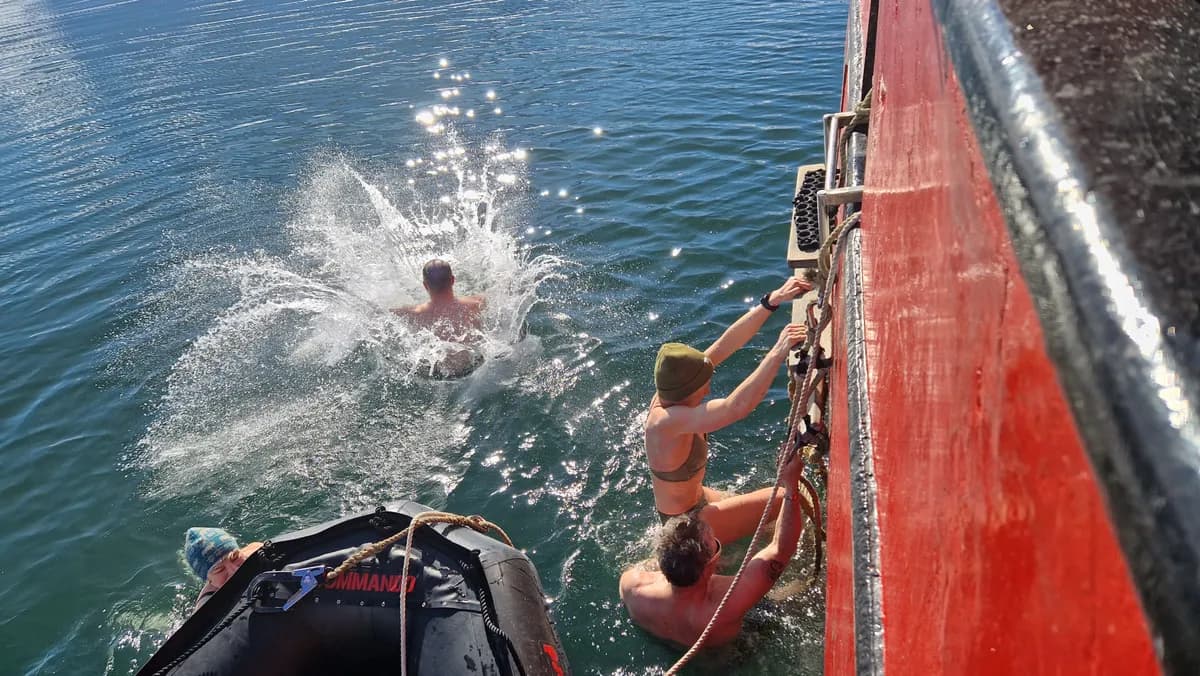
Towels are provided. There’s plenty of hot water and shower facilities (four showers in total). There will also be an opportunity for a polar dip if you’re so inclined!

Do you have suggestions for travel logistics and things to do in Oslo?

Svalbard Ski and Sail Logistics

Our Svalbard Ski and Sail trips starts and finish in Longyearbyen on Svalbard. There are usually multiple daily flights between Longyearbyen and Oslo, Norway.

If you choose to only participate in the boat portion of this trip, you must arrive in Longyearbyen at the latest on Sunday (Day 4 - see Itinerary tab). We will be boarding the boat at around 4:00 pm. At the end of the sailing trip we arrive back in Longyearbyen on Saturday evening and so the earliest flight back to Oslo is Sunday morning at 7:30 am with SAS.

There is an optional 3 days of ski touring offered (see Itinerary tab). If you arrive in Longyearbyen on Day 1 then you can participate in all three pre-sail ski tours, but you can also arrive later than that if you like. Please advise us of your intentions so we can make hotel bookings and other arrangements.

When you book your return flight, you can book a flight (even a very early one works, e.g. the SAS at 07:30 am) from Longyearbyen on the last day (see Itinerary tab).

Airport Hotel Transfers

There are convenient bus airport transfers that bring you from the airport to the hotel and also pick up at the hotels before flights. Transfers are not included in the trip fee. LYR is about 4 km from town, so about 7 minutes by taxi and 10-15 minutes by bus depending on hotel (less than 10 minutes from Mary Ann’s where we’re staying). Cost is about 100 NOK pp for a return ticket (170 NOK for return tickets). You can also hire a taxi which costs about 200-300 NOK each way for a minivan. See this web page for details. Don’t worry — the bus is comfortable and extremely convenient with lots of room for passengers, baggage and skis! Did we mention it’s 4 km and less than 10 minutes?

Booking your flights

There’s no fast way to get to Svalbard. That said, I do have some hard won advice.

First of all, please bring your boots as carry-on. Do not put them in your checked baggage. Many things can be purchased or rented in the case of lost baggage but not boots. We also suggest you bring your ski touring pack with a set of clothing and transceiver (check your shovel and probe as these are things that can be loaned to you easily).

Finding a good deal on a good flight itinerary to Longyearbyen takes a bit of work. Book well in advance of your trip. Be careful of using the discount sites as additional luggage fees — charged for each leg of your trip potentially — can be pretty hefty. You will need two 23-kg bags so factor that into your planning.

Look for and spend a bit of extra money if necessary to get flights with shorter (<4 hr) stopovers and as few connections as possible.

For your flight to Oslo, look for flights with shorter durations and the fewest connections. Direct flights to Oslo from North America are only available from New York City, Miami and Los Angeles (see this webpage for a comprehensive list of direct international flights to Oslo).

I recommend you use one of the big airlines like KLM/Delta or Lufthansa/Air Canada all the way to Oslo, aiming to arrive in Oslo in the early afternoon. Remember to account for baggage costs. SAS offers direct flights from a couple of US hubs (I believe Newark and Denver). Iceland Air offers a slightly different schedule and is worth checking out — not to mention they allow a “free” multi-day “stopover” option for those thinking of checking out Iceland as part of this trip!

From Oslo you typically need to overnight and catch the next morning’s flight to Longyearbyen (with SAS or Norwegian airlines), unless your previous flight was very early in the day (from within Europe). There may be exceptions, such as on Saturdays: If you are skipping the optional 3-days in Longyearbyen (Days 1-3) it's possible to leave North America on Friday and arrive in Longyearbyen on the SAS flight that lands at 19:00 Saturday evening.

For the return (Day 11) SAS has flights that fly from Longyearbyen via Oslo arriving in London on the final day. You can stay at the Radisson Hotel London Heathrow and catch an early flight the next day back to North America -- pretty slick actually. Air Canada has great itineraries code sharing with SAS flying: Longyearbyen to Montreal/Vancouver/Calgary with a ~12 hr layover in London, perfect for getting a good night's sleep.

Oslo Airport Hotel

At the Oslo Airport (Gardermoen) my recommendation is the Radisson Hotel & Conference Centre Oslo Airport ($$-$$$). It’s very comfortable and has an excellent Norwegian-style breakfast buffet — definitely get the “with breakfast” option! It is a short walk from the airport (turn left out of arrivals and walk about 400 m; you can bring a luggage cart with you). It’s very comfortable, and my recommendation for efficiency. I do not recommend booking with a third party agency for the Radisson as making changes will be more complicated and booking directly with the hotel also ensures the best rate (lowest rate is guaranteed).

If you want something a bit cheaper and close to the airport there’s the Scandic Gardermoen ($$). It’s a 7 minute cab or shuttle drive away, which adds to the cost and complication factor. The shuttle service stops at Oslo Airport are on the lower level of Oslo Airport – platform 39. Vy shuttle S55 runs every 15 minutes weekdays from 04:35 – 10:20 and 14:20 – 17:20. Saturday and Sunday every 30 minutes from 04:35 to 01:05 (last departure from the airport). Cost is 80 NOK.

Oslo is a great world class city to visit. There are also good, interesting hotels in downtown Oslo if you want to spend a night or a few days there before or after the trip. I recommend storing your bulky gear at the Gardermoen airport (See Avinor Baggage Check for details & pricing) and taking the train into town with a light overnight bag. Here are a few to consider:

  • Hotel Continental Oslo – Owned by the same family for four generations, Continental is the only Norwegian member of “Leading Hotels of the World”. $$$
  • Scandic Victoria – Central hotel, short walk to Karl Johans gate, parliament and Spikersuppa ice skating rink. $$
  • Comfort Hotel Grand Central – Inside the main train station, 30-min transfer from Oslo airport. $
  • Hotel Rosencrantz – Design hotel in the centre of Oslo. $$

On the way back, book a flight for Day 11 (see Itinerary tab for dates) to Oslo. You can book the earliest flights available but a later flight might be more civilized. If you are heading to a European city as your final destination you should be able to continue on same day. If you are heading across the Atlantic, plan to stay in Oslo again that night and catch an early flight back home, again with one of the big airlines. If offered (rate) it's also possible to fly out of Longyearbyen on the evening of Day 10 (book a flight no earlier than 19:00).

What to do when you arrive in Oslo

If you spend a few days in Oslo there’s lots to do. Take the train (there are two companies; vy.no is the one to use) to the main station and walk around the town. Be sure to check out the harbourfront which has lots of nice restaurants and things to see. Here’s a great post-arrival itinerary:

  1. Book into your airport hotel and have a quick shower. Radisson Hotel & Conference & Red are the nicest but 500 m from the airport, Radisson Blue is right next to the train station and airport. You can store most of your stuff in a storage room at check-in, so make sure you have a small pack with your essentials. Don’t take a nap!
  2. Take the train to the Oslo Central Station. Vy and Flytoget are the two train options, with Vy being a lot cheaper and only a few minutes slower. See this how-to for details%20per%20adult).
  3. Check out the sauna on the harbourfront: Oslo Badstuforening or Pust Sauna. Don’t forget towels and bathing suit. Best is to reserve your spot online well in advance.
  4. Then check out one of the great restaurants with patios with harbour views, such as Seaport Restaurant.
  5. Take the train back to your hotel and around 9 or 10 pm go to sleep. Maybe take a Melatonin tablet to help with jetlag!

Sightseeing in Oslo

Norway’s capital offers world-class culture, food, and easy access to nature. Arriving early is a great way to see this city while getting over your jetlag and hedging for flight and baggage delays.

  • City center & waterfront – stroll Karl Johans gate, the Opera House, and the modern harbor district Aker Brygge.
  • MUNCH museum – located at the centre / waterfront
  • Kon-Tiki Museum – Thor Heyerdahl’s raft expeditions.
  • Fram Museum – Polar Expedition Museum.
  • Holmenkollen Ski Jump – panoramic views over Oslofjord and a museum dedicated to ski history.
  • Nordmarka forest – endless trails for hiking, cross-country skiing, or just a peaceful escape minutes from downtown.
  • Saunas & fjord swims – join locals for a hot sauna followed by a dip in the Oslofjord.
  • Dining & nightlife – from Michelin-starred restaurants to cozy bakeries and vibrant bars, Oslo is a food lover’s hub.
  • Vigeland Sculpture Park – an open-air gallery with more than 200 granite and bronze works by Gustav Vigeland. Extremely cool and a lovely place to enjoy an afternoon using a rented bicycle.
  • Royal Palace & Slottsparken – watch the changing of the guard and stroll the gardens around the Norwegian Royal Family’s residence.
  • Bygdøy Peninsula – home to Oslo’s famous maritime museums and scenic coastal walks.
  • Mathallen Food Hall – a lively indoor market where you can sample Norwegian and international specialties.
  • Oslo Opera House – great place to walk and rooftop view.

Oslo is compact, modern, and walkable, making it an easy stopover to enjoy a taste of urban Norway before your Arctic adventure.

Eating in Oslo and Svalbard

Here are a collection of tips for eating in Norway & Svalbard.

OSL – cheap eats

If you need a fast bite to eat before heading to your hotel, “cheap” pizza is the way to go, located at airport arrivals. Peppes Pizza. Large pizza ~300 NOK (~$42 CAD).

The airport Radisson hotels also have good restaurants with excellent Norwegian menus, but beware: they close at 23:00.

LYR – restaurants (book ahead with large groups)

A few web resources

Can I buy a SIM card in Norway?

If you want to avoid roaming charges but still have cell data or make phone calls, it is very difficult to simply pick up a SIM card in Norway. We recommend getting an eSIM from Airalo with the Norway “Local eSIM” plan. This will let you check email and do messaging and internet calls with services like WhatsApp, Messenger, iMessenger, etc. Do this before you leave home (best done with Wi-Fi available) so that it’s ready to go when you arrive. Setup can be a bit tricky but Airalo has decent how-tos.

Be sure to turn off you regular SIM before you enter the roaming space so you don’t pick up roaming charges. If you want to make and receive phone calls then we recommend the Hushed App, which gives you a virtual phone number (Canadian, UK and US numbers are available) at affordable rates.

My trip ends on Sunday and I see a Saturday evening flight at 20:00 (8 pm). Will we be back in time on Saturday for me to make this flight?

Short answer, yes. You can book the 20:00 flight if you need to get home in a hurry.

This means you will be a bit rushed packing up and getting to the airport, and you'll miss the final dinner. But we aim to be back to Longyearbyen by 17:00 at the latest, and you should have time to pack your bags during the sail back after skiing.

It's not a bad idea, just changes the nature of the end of your trip quite a bit.

As always with tight travel arrangements, make sure you have flexible tickets and/or insurance in case of the unexpected.

Can I rent skis, avalanche gear, ski crampons, glacier kit, or anything else from you?

Many guests choose to rent skis or other equipment from us. Particularly skis can be a hassle to travel with, and often get delayed due to their bulk on flights operating at capacity. Please check out our rental list here: rental.sawback.com. Let us know what you need to rent and we'll take care of it!

How far north latitude will we be going? The insurance company I use doesn’t cover trips north of 80 degrees.

Our northernmost point will be less than 80 degrees, and at most about 79.6 degrees North. So issues there.

Speaking of tipping, do you have guidelines for that?

Tipping is always optional of course. But tipping culture in multicutural Svalbard is a bit complex. Here are some tipping suggestions:

  • Ship’s crew: Consider 200 EUR if you feel the ship’s crew has done a great job. They ask that you please bring cash for this in EUR, and not Norwegian Krones.
  • Guiding staff: Consider 5% of your trip fee for a job well done, and 10% if we significantly exceeded your expectations (i.e. provided you with repairs or rental gear at no cost, made a special effort to accommodate you, etc.) Cash is preferred (CAD or USD if possible) but you can also send money electronically via our payment portal, pay.sawback.com (it’s your choice, credit card or transfer. Note that credit cards incur a 2.7% fee whereas bank transfers ensure all the cash arrives in our bank account with no fees!
  • Restaurants in Svalbard: there is no tipping culture in Norway, and tipping is not expected. However, 5% is a welcome gesture for excellent service.
Is there Wi-Fi on the boat?

No there is no internet access available on the boat. However, Norwegians are big fans of cellular coverage and you might be surprised to get a strong enough cell signal to check your messages from time to time, especially in the first and last days of the sailing trip.

How do we dry our gear?

There is plenty of heating on the Noorderlicht and there are numerous radiators and places where you can dry your gear. The engine room is also occasionally made available if we have an especially wet day. We also recommend you bring along a piece of thin (2-3 mm) cord to fashion a drying rack in your room.

Do I need rubber boots?

In fact we’ve never needed them. The guides might get their feet wet pulling/pushing the Zodiac onto/off shore but everyone else uses a little wooden step to keep dry.

What is included with the trip fee?

Included: 7 nights yacht rental with crew, harbour fees, permit fees, UIAGM / IFMGA mountain guides, multi-course dinners and breakfast on board. Pre-trip land-based ski touring: 3 additional days guided ski touring and excursions out of Longyearbyen, 3 x Hotel B&B. Not included: Air travel, alcoholic beverages, lunches and dinners in Longyearbyen, hotel in Oslo en route

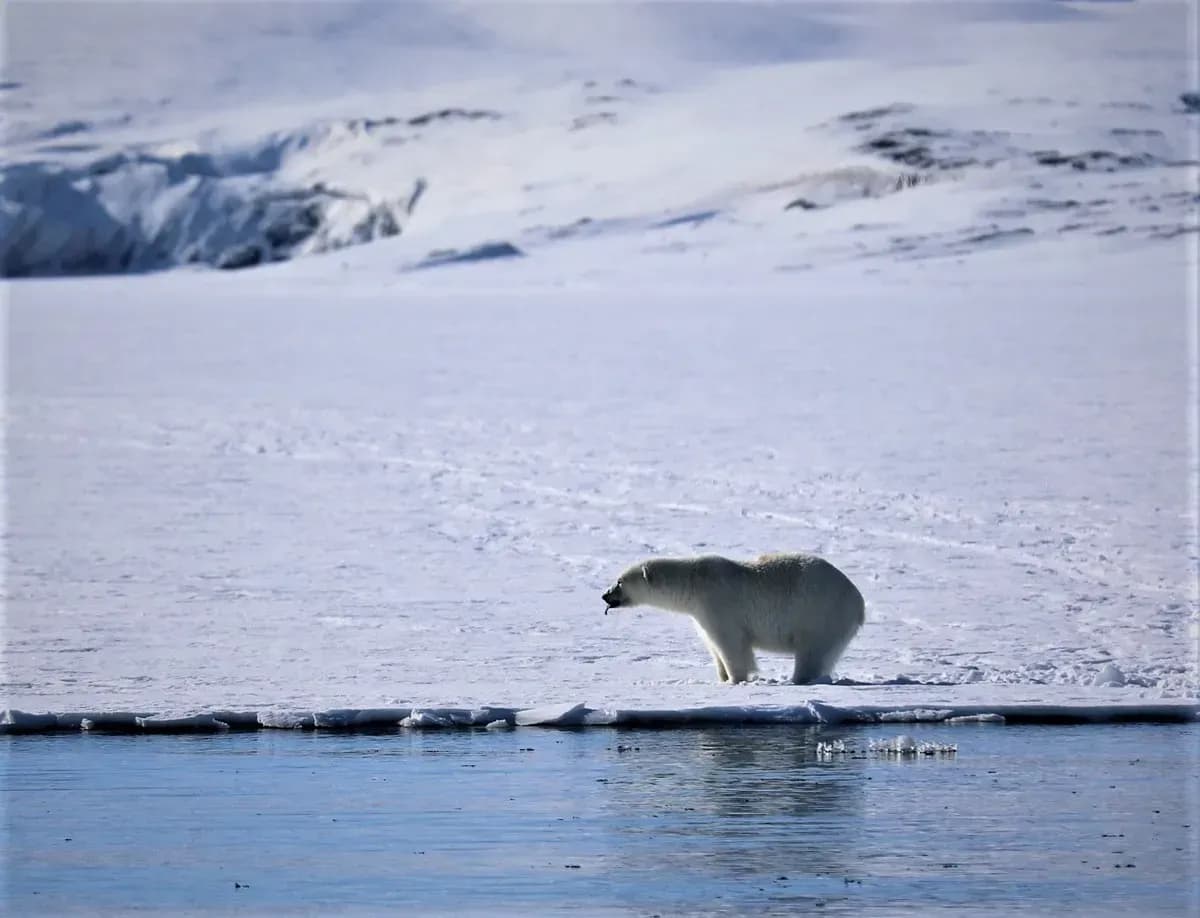
“Will we get a chance to take photos of Polar Bears?” / or: “Will we be attacked by Polar Bears?”

The short answer to both questions is “No”. While it is possible we will see polar bears on this trip it is highly unlikely. Many tourists travel to Svalbard with the goal of seeing polar bears, and join trips that specifically go into the polar bear’s prime habitat — which is north into the pack ice. The goals of our trip are simple: to get the best possible skiing accessible by sail boat. This means sticking to the ice-free waters further south. As a result, I have to disappoint those of you hoping to see polar bears.

At the same time, polar bear safety is always an important consideration. There will always be at least one person in each group carrying a rifle as well as flare guns (a type of bear deterrent). Since we move from place to place and do not camp on land, there is also no chance of enticing a bear over time into our midst.

The reports we hear every couple of years about encounters with polar bears on Svalbard are either with habituated bears close to the towns or far north with tour groups actually seeking out polar bear encounters. Unfortunately in each case the end result has been the destruction of a bear who is usually emaciated, desperate and close to death already.

Will we see the Northern Lights?

The Northern Lights season ends in April in Svalbard. It’s not that they don’t exist after that time, but the midnight sun makes it impossible to see them!

What are snacks like?

We provide you with a variety of snacks, but bring your own if you’re fussy.

Is there hot water available for tea, etc.?

Yes!

Should I bring a helmet?

Helmets are not mandatory but are recommended.

Can I charge my devices?

There are plenty of charging outlets. Just be aware it’s Euro-outlet (2-prong) 220V which works with just a plug adapter for USB chargers, phones, heated socks — but not your hair dryers!

Can we pay with a credit card for tips/wine/souvenirs on the boat?

Yes you can use a credit card to pay for misc items on board. Cash is always preferred for tipping.

I'm arriving early for my trip. Do you have suggestions of where to stay in Longyearbyen?

Coal Miners’ Cabins - Budget expedition style - * Type: basic lodge / hostel hybrid Typical price: roughly NOK 900 to 1500 per night for simple rooms.
Description: Former miners’ housing converted to accommodation. Rooms are simple; many share bathrooms and kitchens. Social atmosphere and practical for guides, students, or expedition teams staging gear. Slightly outside town centre.

Svalbard Hotell Polfareren - Midrange modern hotel - ** Type: comfortable boutique hotel Typical price: about NOK 2400 to 3000 per night.
Description: Modern rooms, central location, solid breakfast, common choice for independent travelers and small groups. Practical base in town with easy access to operators and restaurants.

Mary-Ann’s Polarrigg - Character hotel - ** Type: quirky Arctic themed lodge Typical price: roughly NOK 2000 to 3000 depending on room type.
Description: One of the most distinctive properties in town. Built around old miners’ barracks with eclectic decor, cozy bar, and a bit of expedition nostalgia. Popular with photographers and adventure travellers.

Radisson Blu Polar Hotel Spitsbergen - Conventional full-service hotel - ** to *** Type: international standard hotel Typical price: roughly NOK 2500 to 3500+ per night depending on season.
Description: Large comfortable hotel in central Longyearbyen with restaurant, bar, meeting rooms, and views over Adventfjorden. Often used by expeditions and conferences.

Basecamp Spitsbergen - Boutique Arctic lodge - ** to *** Type: small themed boutique hotel Typical price: roughly NOK 3000 to 4500+ per night depending on room type and season.
Description: A distinctive small hotel in the centre of Longyearbyen built in traditional trapper style. Interiors use driftwood, furs, maps and expedition artifacts to mimic a historic hunting lodge. Only about 16 rooms, so it feels intimate and atmospheric compared with the larger hotels in town.

Funken Lodge - High-end Arctic hotel - *** Type: upscale lodge / luxury boutique Typical price: about NOK 4000+ per night.
Description: The most upscale property in Longyearbyen. Located above town with views over the fjord and glaciers; stylish rooms, strong restaurant, and quieter atmosphere.

Svalbard Ski & Sail

from CA$10850

Guides

Christoph Gnieser

Christoph Gnieser

Expedition Leader

Chris left a comfy university position for the vagaries of guiding a number of years ago. Research expeditions, tour guide engagements or private adventures have lured him to the Arctic and Antarctic at least for some time of each year ever since 1985. His engagements with Oceanwide Expeditions date back to 2003. He holds degrees in Geography, Geology and Cultural Anthropology. Research engagements for a Master’s degree investigated the impacts of industrial development on permafrost dynamics. His Ph.D. and later research emphasis, however, focused on Recreation Ecology of Polar Ecosystems – investigations on the environmental consequences of recreational activities at both ends of our planet.

Sofia Forsman

Sofia Forsman

Ski Guide ACMG

Sofia Forsman is an ACMG Ski Guide with a strong background in ski mountaineering, glacier travel, and remote expedition travel. Originally from Sweden, she developed her mountain skills in the Scandinavian ranges before establishing herself in Canada. Sofia has guided extensively in the Coast Mountains and Rockies and has worked on a wide range of backcountry ski programs, from hut-based trips to multi-day glacier traverses. She is known for her calm presence, strong technical skills, and thoughtful approach to risk management in complex alpine terrain. Sofia enjoys helping skiers build confidence and efficiency in the mountains while keeping the focus on good movement, safe decision-making, and having fun in wild places. When not guiding, Sofia spends her time ski touring, climbing, and exploring remote mountain ranges. Sofia will join us in Northern Norway this April for our Ski and Sail program on both Noorderlicht and Saeftinghe, as well as at Seiland House.

Massimo Candolini

Massimo Candolini

Mountain Guide UIAGM/IFMGA

I’ve been mountaineering since I was a child and I have scaled many peaks in the Alps, with a preference for winter, especially for skiing. I’ve been a Mountain Guide since 2003 and, from the beginning, I have devoted myself to traditional guide work, teaching and sharing, seeking to transmit my passion for mountaineering to others. My love of snow and ice now takes me to the polar regions, in the never-ending search for the perfect excursion!

Christian Schlumpf

Christian Schlumpf

Mountain Guide IFMGA/ACMG

Christian has dual Canadian and Swiss citizenship. In his former life he completed a degree in Engineering Physics and worked for an engineering firm in Switzerland. It was there that he decided to change courses dramatically and become a mountain guide. He returned to Canada 10 years ago to pursue this dream and hasn’t looked back. Today, Christian is a fully certified Mountain Guide (ACMG/IFMGA) and one of Sawback’s Lead Ski Guides in 2024/25. This winter Christian will be in Japan, our Canadian Rockies Traverse trips (Wapta and Bow Yoho), Sunrise Lodge, and again in Svalbard.

Joel McBurney

Joel McBurney

Ski Guide ACMG

Residing in Nelson, BC with his wife and two boys, Joel spends the winter as a Lead Guide for Baldface Lodge in addition to Big Country Guiding trips. With over thirty years of backcountry experience, including two decades of guiding, he never tires of grabbing his skis or splitboard and heading out of a day in the mountains.

John Race

John Race

Mountain Guide IFMGA/AMGA

John Race is an IFMGA-certified mountain guide based in Leavenworth, WA. Along with his wife, IFMGA mountain guide Olivia Race, he runs the Northwest Mountain School, which he founded in 1994. John began guiding full-time in 1989, and his early career focused on high-altitude expeditions: 2 Everest, 1 Shishapangma, 2 Cho Oyu, 23 Denali, 10 Aconcagua, 15 Mexican Volcanoes, as well as a few dozen other trips to places like Kilimanjaro, Mt. Bona, Mt. Sanford, the Ruth Gorge, and Elbrus. John reached IFMGA status in 2006 and shifted his focus to European ski tours. John & Olivia have organized and led over 140 ski tour weeks in France, Italy, Switzerland, and Austria. On an early sail-ski trip to South Georgia Island, he successfully guided the Shackleton Crossing and caught the sailing bug. John and Olivia recently returned from a 2-year trip with their kids, then ages 9 and 11. As a family, they crossed the Atlantic by sailboat, trekked & boated in Nepal, and eventually spent 2 summers in the Arctic, pack rafting and exploring with their kids. John is a former Vice President of the AMGA and an AIARE course leader and provider.

Peter Wainwright

Peter Wainwright

Ski Guide ACMG

Peter Wainwright is an ACMG Ski Guide based in Vancouver, BC who guides internationally across a wide range of mountain and polar environments. He has guided extensively in Western Canada, including heli-skiing operations in British Columbia, and regularly works on international expeditions and ski touring programs in places such as Svalbard, Norway, and Antarctica. His experience spans glacier travel, expedition logistics, and technical ski mountaineering in remote terrain. Peter is known for his calm leadership, careful decision-making, and strong technical systems in complex alpine environments. His guiding style emphasizes efficient travel, solid risk management, and creating memorable ski experiences in wild landscapes. When not guiding, Peter continues to travel widely in the mountains, pursuing ski mountaineering, climbing, and exploration in remote ranges around the world. Peter will join us in Northern Norway and Svalbard this season.

Andre Ike

Andre Ike

Mountain Guide IFMGA/ACMG

Andre lives in the Whistler–Squamish corridor of British Columbia, where he has called home for the past 35 years. He is an IFMGA Mountain Guide, an ACMG instructor and examiner, and a Level 3 professional member of the Canadian Avalanche Association. With over 25 years of experience as a ski touring and heli-ski guide, Andre spent 15 years as Operations Manager at Ripley Creek in Stewart, BC, where he helped launch the operation and pioneered hundreds of first descents. He now guides with Bella Coola Heli Sports while continuing to expand his winters through international ski trips. In recent years, Andre has returned to his roots in ski touring, seeking a deeper connection to the mountains through human-powered exploration. Whether guiding in his home Coast Mountains of BC, or traveling to destinations such as Japan, Norway, and across Europe, he is passionate about sharing these environments with others. For Andre, the greatest reward lies in the experience itself and the joy it brings to those he guides—often even more than the skiing.

Phil Wickens

Phil Wickens

Expedition Leader

Phil studied biology at Imperial College in London, England. After completing his PhD in plant pathology, he worked for two winters and three summers as a field guide for the British Antarctic Survey, combining his passion for natural science with that of mountain exploration and photography. He has led numerous climbing and skiing expeditions to Antarctica, Tibet, India, Pakistan, Nepal, Peru, East Greenland, the Caucasus and Canada, and was Vice President of the Alpine Club in 2006-7. Phil works as a freelance photographer, polar guide, expedition leader, naturalist and lecturer in expeditions, polar geology and history. When not working or playing in far-flung places he lives in England on the edge of Peak District National Park.

Brian Gould

Brian Gould

Mountain Guide IFMGA/ACMG

Brian is a Mountain Guide and Professional Engineer specializing in snow avalanche hazards. He is based in Squamish, BC.

Penny Goddard

Penny Goddard

Mountain Guide IFMGA/ACMG/NZMGA

Penny is a kiwi mountain guide with bases in Revelstoke and New Zealand. She is driven to explore new places and has run adventurous trips all over the world. Her background in international and remote expeditions includes high altitude climbing, first ascents in Antarctica and Tibet, an exploratory ski traverse in Greenland and ski descents in Antarctica. In addition to alpine and ski guiding, she works as an avalanche safety consultant. She's been known to publish books and papers on avalanche safety from time to time.

Jörg Wilz

Jörg Wilz

Mountain Guide IFMGA/ACMG/VDBS

Jörg runs OnTop Mountaineering out of Canmore, AB. Originally from Heidelberg, Germany Jörg settled in Canada many years ago attracted by the incredible heli-skiing. He still heli-skis winters in western Canada and operates his guiding business worldwide.

Gallery

Tour Image
Tour Image
Tour Image
Tour Image
Tour Image
Tour Image
Tour Image
Tour Image
Tour Image
Tour Image
Tour Image
Tour Image
Tour Image
Tour Image
Tour Image
Tour Image
Tour Image
Tour Image
Tour Image
Tour Image
Tour Image
Tour Image
Tour Image
Tour Image
Tour Image
Tour Image
Tour Image
Tour Image
Tour Image
Tour Image
Tour Image
Tour Image
Tour Image
Tour Image
Tour Image
Tour Image
Tour Image
Tour Image
Tour Image
Tour Image
Tour Image
Tour Image
Tour Image
Tour Image
Tour Image
Tour Image
Tour Image
Tour Image
Who is Sawback Alpine Adventures?

Sawback is owned and operated by Tom Wolfe, a professional mountain guide living in Canmore, Alberta. Sawback employs a number of other guides, all chosen for their expertise and experience in the mountains. See our Guides and Staff page.

Where are you located?

We are based in Canmore, Alberta. However, we run trips across Western Canada, and to many far flung and beautiful locations around the world. Some of our guides are based in Golden, British Columbia, along with other locations.

Can I do something that isn’t listed?

Absolutely. Please contact us to inquire about doing something that isn’t listed on our website. We are always keen to help organize custom trips. Apart from skiing, we can also organize and guide trips involving ice climbing, mountaineering, rock climbing, and hiking!

How much experience & fitness do I need?

It depends on the trip! We can accommodate total beginners on some, and there’s always the option of creating a custom trip. Many of our trips have more than 1 guide, which allows the group to be split to accommodate different levels. The difficulty of each trip is rated - see our Trip Rating page. Please feel free to contact us if you have any questions about your experience or fitness.

How are your guides trained?

All of our guides are certified by the ACMG (Association of Canadian Mountain Guides) and/or the IFMGA (International Federation of Mountain Guide Associations). These certifications represent the highest level of training in mountain / ski guiding and risk management in the world. Becoming fully certified as a mountain guide requires many years of experience skiing and climbing, before embarking in a rigorous training and exam process that takes between 4 to 8 years to complete.

Do participants have to sign a Waiver to participate?

Yes, all guests, or their parent or legal guardian for guests under 18, are required to review and agree to Sawback’s Release of Liability, Waiver of Claims, Assumption of Risk and Indemnity Agreement (the “Waiver”) as a condition of participating in any trip or activity with us and will apply to your participation in the trip. If the Waiver is not completed, the individual will not be permitted to participate. The Waiver will apply to all your activities with us for a period of 24 months from the date you sign it. By signing the Waiver, you will waive or give up certain legal rights, including the right to sue for negligence, breach of contract, or breach of the Occupiers Liability Act or claim compensation following an accident. The form of Waiver can be viewed and downloaded here. PLEASE READ THE WAIVER CAREFULLY PRIOR TO BOOKING ANY TRIP!

What Terms and Conditions Apply to my Booking?

Our Booking Terms & Conditions can be viewed here. When you book a trip, you are deemed to have accepted our Booking Terms & Conditions on behalf of yourself and all individuals who wish to participate in your booking. Our Booking Terms & Conditions contain important terms about the booking, including our payment and cancellation policies and waiver requirement. Please review these carefully before booking.

How safe are your trips?

Every trip in the mountains involves certain hazards and not all hazards can be mitigated or avoided. Our waiver outlines many of these. The safety of our guests is our absolute number one priority. Every day, the guide(s) on your trip will go through a formalized process to discuss and identify hazards, along with planning risk mitigation strategies. This process sets the stage for ongoing risk assessment through the day as new information is gathered. We strive to communicate this to our guests as much as feasible – a morning briefing about current conditions at a minimum. If you have any questions about safety at any point before or during your trip, please don’t hesitate to speak up!

Frequently asked questions

Didn't find an answer to your question?

Is there something you're uncertain about? Reach out to our welcoming team for assistance.

What Our Clients Say

Testimonials from customers who have already used our services.

Safety is a Forefront!

Tom guided our week at Burnie and provided the group with expert knowledge of the terrain and a superb week. Safety was always at the forefront of the decisions made and the group felt safe in his hands, along with his fellow guide for the week. Communication was excellent and professional. Would highly recommend and am looking forward to many future trips with Tom and Co.

client avatar
google

Tom Smith

You won’t regret it.....

Tom Wolfe and Svalbard, Norwegian Arctic on the Noorderlicht. I’ve done a few great trips with Tom over the years so when he emailed a year ago and asked if I wanted to go to the Arctic and ski from a steel hulled yacht I said yes without thinking... Good call. Svalbard was mind-boggling. I had expectations but it beat them. Getting into the zodiac everyday and skiing was amazing. Sea ice, glaciers, seals, walruses, beluga whales and polar bears. Huge huge glaciers, peaks as far as the eye can see. Just amazing scenery.

client avatar
google

Alan Johnson

Recommend without hesitation

I met Tom in April 2011 when we camped outside Fairy Meadow hut at the end of the N Selkirks traverse, he was guiding another group. Since meeting him I’ve done 3-4+ trips with him (Burnie, Sorceror, etc.) and found him to be one of the top guides I’ve had the pleasure to travel with over the last 20 years. I’m at that spot in life (almost 61) where I am getting slower and his daily trip planning does a good job accomodatiing the full range of abilities (even if some of still have lots of enthusiasm, but less stamina than in our 40"s) and still incorporates us as part of the group, not just some straggler OTB(off the back, an old cycling term). Safety conscious, good judgment and all around top notch & smart guy. Recommend without qualification.

client avatar
google

Jim Cossitt

Related tours

Svalbard Ski & Sail tripView details about Svalbard Ski & Sail trip

Svalbard Ski & Sail

8 day(s)Norway

Longyearbyen, Svalbard

Arctic Ski Touring from a Small Expedition Vessel | 8-12 Guests

A ski touring and sailing expedition along the west coast of Spitsbergen, in the high Arctic between mainland Norway and the North Pole.

The Svalbard archipelago consists of more than 60 largely uninhabited islands in the high Arctic, at over 78° north—level with Ellesmere Island and northern Greenland.

Skiing here is defined by its setting: steep mountains rising directly from the sea, accessed by small boat and zodiac. Each day is shaped by weather, sea ice, and conditions, with the flexibility to move between fjords and choose objectives accordingly.

Despite its latitude, Svalbard is straightforward to reach, with regular flights into Longyearbyen and a short transfer to the harbour.

Expedition Vessels

We operate on three distinct sailing vessels in Svalbard: Noorderlicht, Meander, and Rembrandt van Rijn, each offering a different balance of space, comfort, and expedition style.

  • Noorderlicht — 12 guests; classic schooner with exceptional space per guest and a traditional expedition atmosphere
  • Meander — 10–12 guests; compact, efficient platform with strong logistics and modern systems and amenities
  • Rembrandt van Rijn — up to 29 guests; larger vessel with private cabins and a more comfortable onboard experience

Learn more about the vessels by clicking the Accommodation tab above

Ski Antarctica tripView details about Ski Antarctica trip

Ski Antarctica

29 day(s)Antarctica

Antarctic Peninsula

A Ski Mountaineering Expedition to the Antarctic Peninsula

Now accepting applications for 2026 and 2027

Antarctica is one of the most unusual places on Earth to travel on skis. Mountains rise directly from the ocean, glaciers spill into deep blue bays, and the terrain stretches for hundreds of kilometres in every direction.

Our expedition is built around reaching that terrain.

We sail from Ushuaia aboard the expedition yacht Ocean Tramp, cross the Drake Passage, and spend the following weeks exploring the islands and mountains of the Antarctic Peninsula. From the vessel we travel by zodiac to remote landing sites and begin ski tours from sea level.

Most days involve several hours of climbing through glaciated terrain followed by long descents back toward the ocean.

Typical Ski Days

  • 700–1500 m vertical
  • 4–8 hours of travel
  • Small expedition team
  • Objectives chosen according to weather, snow, and ice conditions

This is not a cruise with skiing added on. The entire expedition is structured around ski mountaineering.

Why Ski Antarctica

Nowhere on Earth combines large mountains, maritime snow, and ocean access in the same way.

Along the Antarctic Peninsula peaks rise dramatically from the sea and glaciers descend directly to the shoreline. The result is terrain where it is possible to start a tour from the water and ski all the way back to the coast.

Conditions vary, but when the weather stabilizes the snowpack provides long continuous runs across broad glaciers, steep couloirs, and alpine faces.

Wildlife encounters are common. Whales and orca pods move through the channels, penguin colonies line the shores, and seals rest on the ice nearby.

It is expedition skiing in its purest form.

The Expedition Vessel

The expedition takes place aboard the Ocean Tramp, an aluminium expedition yacht purpose-built for remote Antarctic operations.

Life aboard the yacht is simple and comfortable:

  • Ocean Tramp has four double guest cabins
  • Spacious saloon and dining area
  • Large deck space for wildlife viewing and photography
  • Zodiac for shore access

Ocean Tramp comfortably carries a small team, allowing access to areas that larger ships cannot reach in authentic expeditionary style.

Ski Objectives

The mountains of the Antarctic Peninsula offer a huge variety of terrain.

Broad glaciated peaks, technical couloirs, and long ski lines dropping toward the ocean are all possible during the expedition. On strong teams we sometimes commit to larger multi-day objectives in expedition style, establishing camps to access higher summits.

Several major peaks in the Palmer Archipelago rise more than 2500 m directly above the Southern Sea, creating some of the most dramatic ski touring landscapes in the world. Our 2025 expedition climbed Mount Français, 2822 m.

On most expeditions we get two or three days of weather that make skiing difficult or impossible. That is one reason we run a longer trip. Antarctica is a long way to travel, and shorter itineraries can easily spend a large portion of their ski days waiting for a window.

Once we are on the Peninsula we ski whenever the weather allows. When storms move through we reposition to another objective or switch gears: sea kayaking, historic sites, whales, photography. There is always something going on.

A Typical Day

A ski day in Antarctica often begins with the team gathering as the crew positions the boat near the day’s objective.

After breakfast we board the zodiacs and travel to shore.

From there the day unfolds in classic expedition style:

  • Land on a beach or sea ice
  • Climb through glaciated terrain for several hours
  • Reach a summit or high point
  • Ski long descents back toward the ocean
  • Return to the vessel for the evening

Long daylight hours during the Antarctic summer allow flexible days and often spectacular evening descents.

Sea Kayaking and Exploration

When conditions allow we also explore the coastline by sea kayak.

Protected bays such as Skontorp Cove are ideal for paddling among icebergs and wildlife, offering a different perspective on the Antarctic landscape.

These quieter days balance the more demanding ski objectives and allow us to explore the environment in depth.

Who This Expedition Is For

This expedition is designed for experienced ski tourers who are comfortable travelling in remote environments.

Participants should be able to:

  • Ski confidently in variable snow
  • Tour efficiently with skins and ski crampons
  • Travel safely in glaciated terrain as part of a guided team

Previous expedition experience is helpful but not required. Guides manage route finding, glacier travel, and safety systems, but everyone on the team contributes to the expedition.

You should also be comfortable spending time aboard a sailing vessel and helping with simple tasks during the voyage.

The Team

The expedition is led by an experienced polar team combining professional mountain guides and seasoned sailors.

Phil Wickens – Expedition Leader

Phil organizes and leads ski mountaineering and backcountry operations. He has more than two decades of experience guiding and running expeditions in Antarctica.

Tom Wolfe – IFMGA Mountain Guide

Tom is the founder of Sawback Alpine Adventures and has guided ski mountaineering expeditions across the Arctic, Antarctica, and major mountain ranges worldwide.

Supporting Phil and Tom is a highly experienced sailing crew responsible for navigating the vessel through Antarctic waters and positioning the team for the best objectives.

Expedition Style

Our approach is deliberately small and flexible.

Large ships visit Antarctica every year, but very few trips are designed specifically for ski mountaineering. By travelling with a small team aboard a sailing vessel we can reach quieter anchorages and respond quickly to weather and ice.

This creates opportunities that simply do not exist on larger expedition cruises.

Join the Expedition

Antarctica is not an easy place to reach, and opportunities to ski here are limited.

Each season we run a small number of expeditions with a limited number of places available.

If skiing in Antarctica has been on your mind for a while, this is the kind of trip that makes it possible.

Fjords of Northern Norway tripView details about Fjords of Northern Norway trip

Fjords of Northern Norway

8 day(s)Norway

Lyngen Alps, Tromsø, West-Finnmark

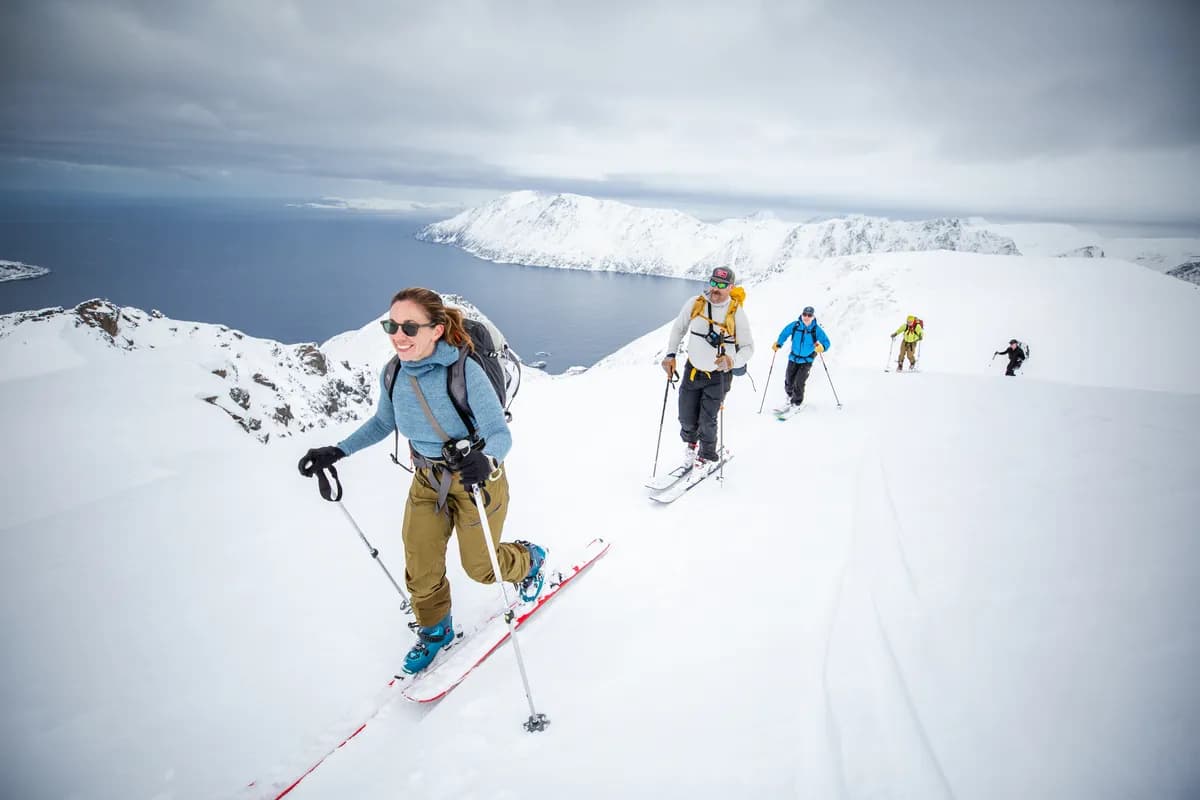
Explore Arctic Norway by Sailboat and Skis

Our Fjords of Northern Norway program is a one-week ski and sail adventure aboard the Saeftinghe, a classic expedition sailing vessel perfectly suited to exploring the rugged coastline of Arctic Norway. Each itinerary focuses on a different region and seasonal window, moving progressively north through the islands, fjords, and alpine terrain that make northern Norway one of the world’s great ski touring destinations.

From the granite peaks of Lofoten and Vesterålen to the dramatic mountains of Senja, the glaciated summits of the Lyngen Alps, and the remote fjords of West Finnmark, these trips combine exceptional skiing with the flexibility and atmosphere that only a sailing vessel can provide.

Far From the Crowds

Northern Norway has become one of the world’s premier ski touring destinations, particularly in the Lyngen Alps where spring conditions can attract significant traffic on the classic routes. Travelling by sailboat changes the experience completely.

Rather than operating from roads and fixed accommodations, we move with the conditions, anchoring deep within fjords and close to ideal ski objectives. This allows access to quieter terrain, remote islands, and long summit-to-sea descents rarely reached by day-tourers. Combined with the experience of travelling aboard a classic Arctic sailing vessel under the guidance of an experienced captain and crew, the result is a true expedition-style ski touring experience.

2027 Itineraries

Week 1: Lofoten and Vesterålen

  • February 27 - March 6
  • Embarkation: Harstad
  • Disembarkation: Harstad

This early-season itinerary explores the maritime ski touring terrain of Lofoten, Vesterålen, and southern Troms. Depending on conditions, the route may extend into the northern Lofoten Islands before working back through the fjords and islands surrounding Harstad, Grytøya, and Andørja. Early March offers excellent opportunities for northern lights viewing combined with increasingly long Arctic days.

Week 2: Vesterålen, Senja, and Troms

  • March 6 - 13
  • Embarkation: Harstad
  • Disembarkation: Tromsø

Beginning in Harstad and working north toward Tromsø, this itinerary links together the steep coastal mountains of Vesterålen and Senja with the alpine terrain of northern Troms. Sharp granite peaks, deep fjords, and long summit-to-sea descents define this spectacular section of coastline. Northern lights viewing often remains possible during clear evenings.

Week 3: Lyngen Alps and West Finnmark

  • March 13 - 20
  • Embarkation: Tromsø
  • Disembarkation: Alta

This itinerary explores the classic ski touring terrain between Tromsø, the Lyngen Alps, and West Finnmark. Possible destinations include Kågen, Arnøya, Seiland, and the fjords surrounding Øksfjord and Stjernøya. Long spring descents directly to the sea, glaciated alpine terrain, and increasingly stable snow conditions define this period of the season.

Week 4: West Finnmark, Lyngen, and Troms**

  • March 20 - 27
  • Embarkation: Alta
  • Disembarkation: Tromsø

Beginning in Alta and working south toward Tromsø, this itinerary revisits the spectacular terrain of West Finnmark and Lyngen during one of the best periods of the Arctic spring ski season. Longer daylight hours, stable maritime snowpacks, and flexible boat-supported access combine to create outstanding conditions for ski touring among the fjords and islands of northern Norway.