Logo

The Original Rockies Traverse

Trip Image

Duration

7 days

calendar

Months

Apr

level

Trip level

3/5

Wapta Traverse

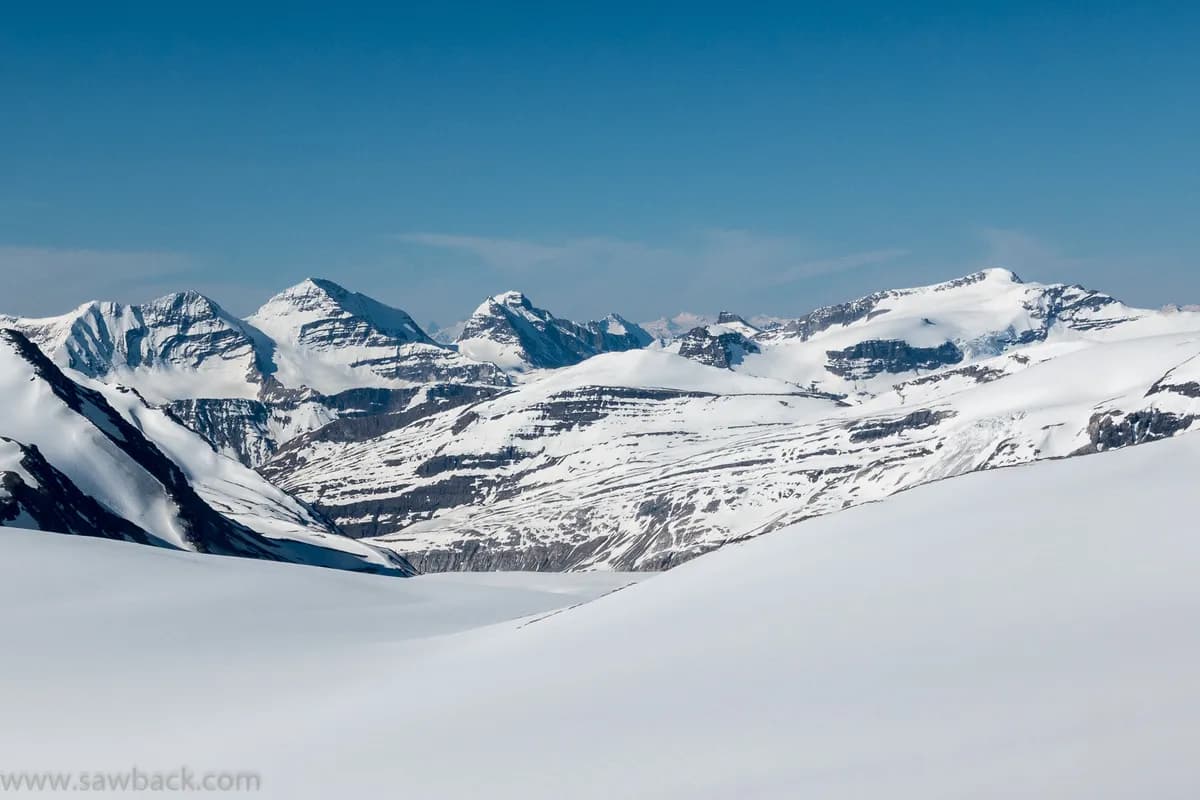
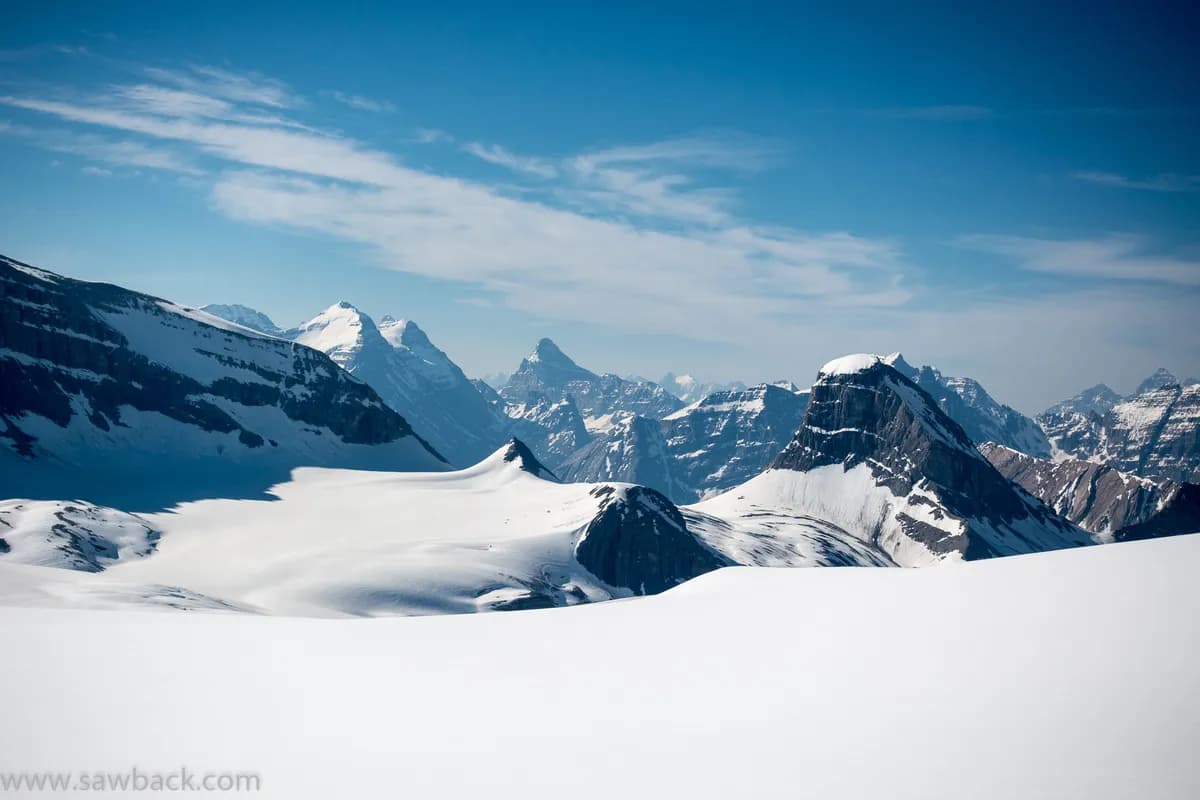
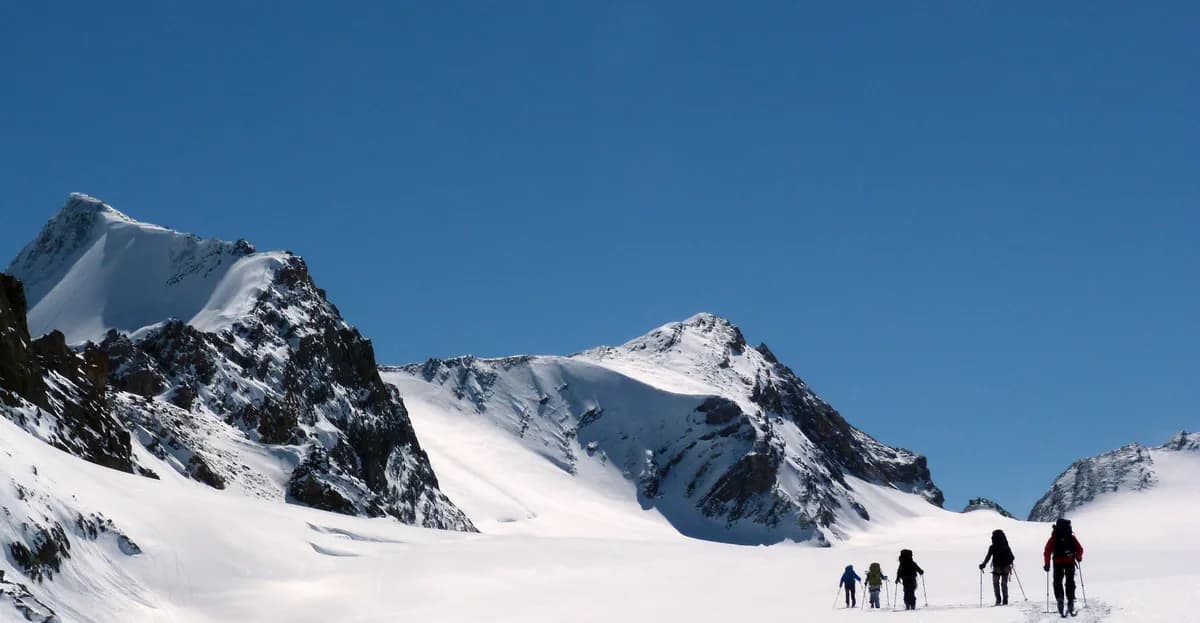
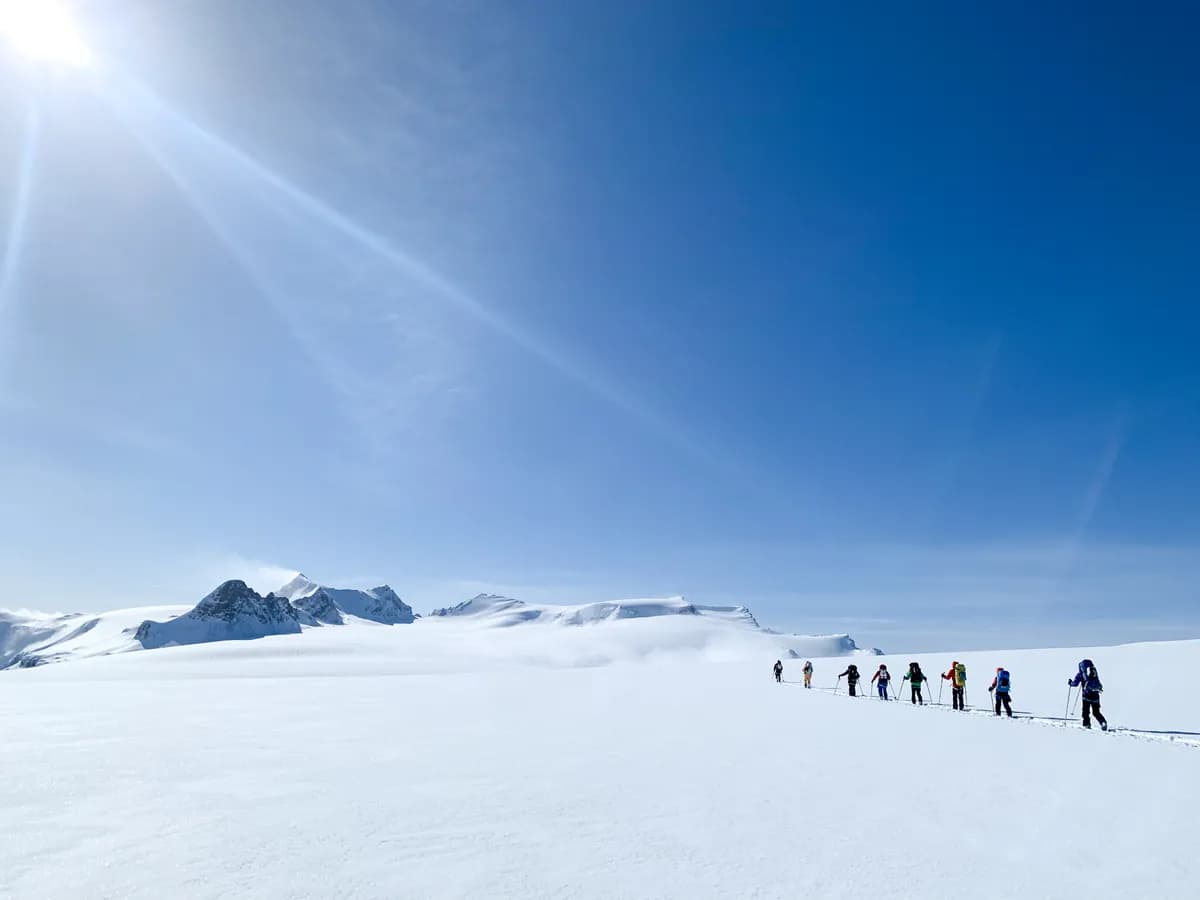
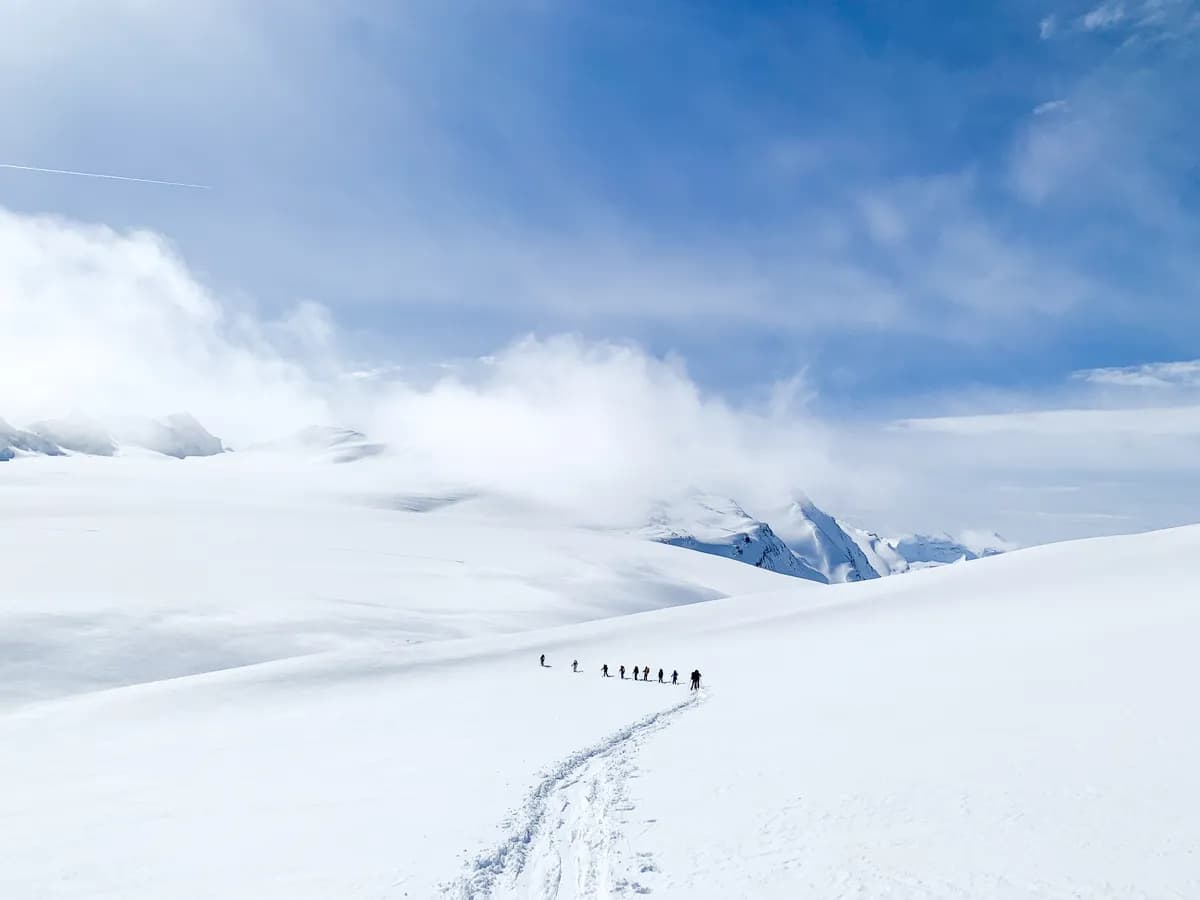
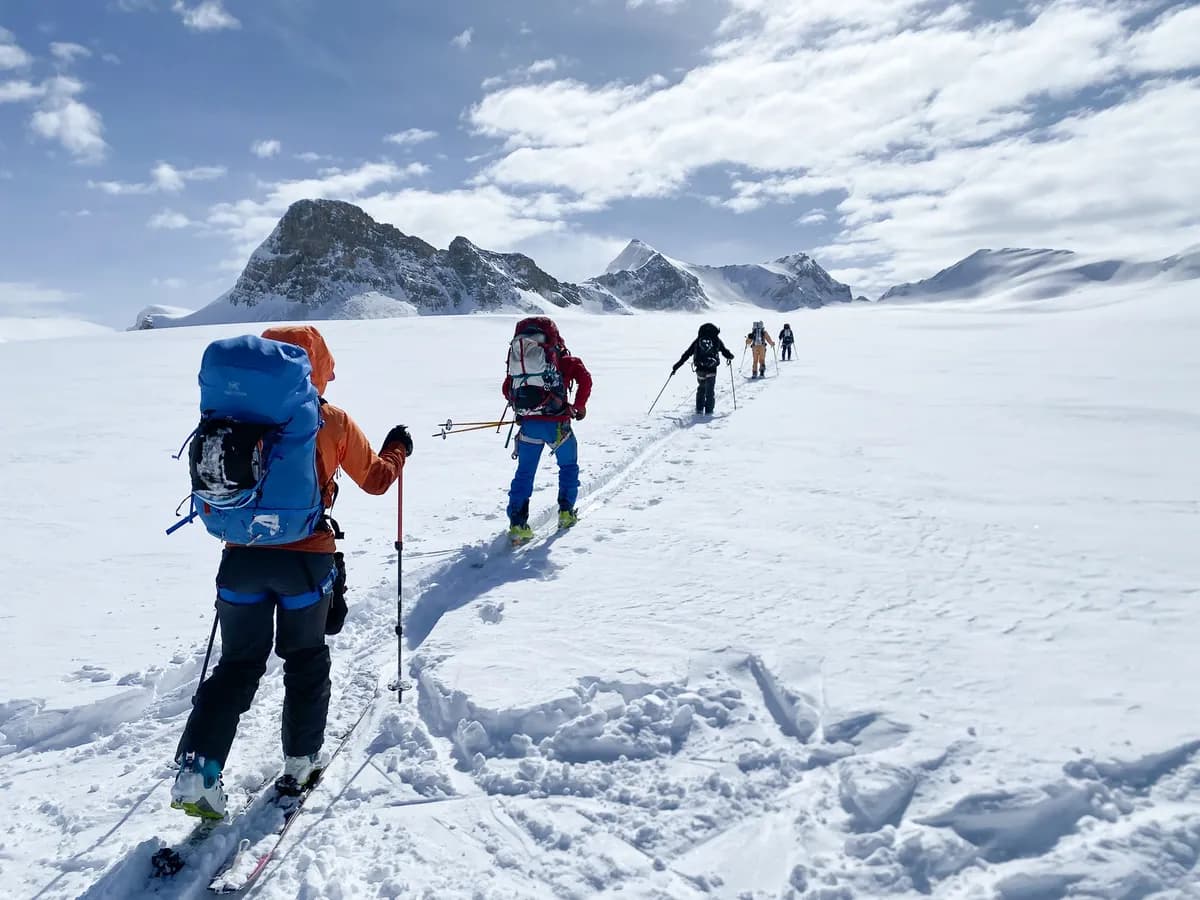
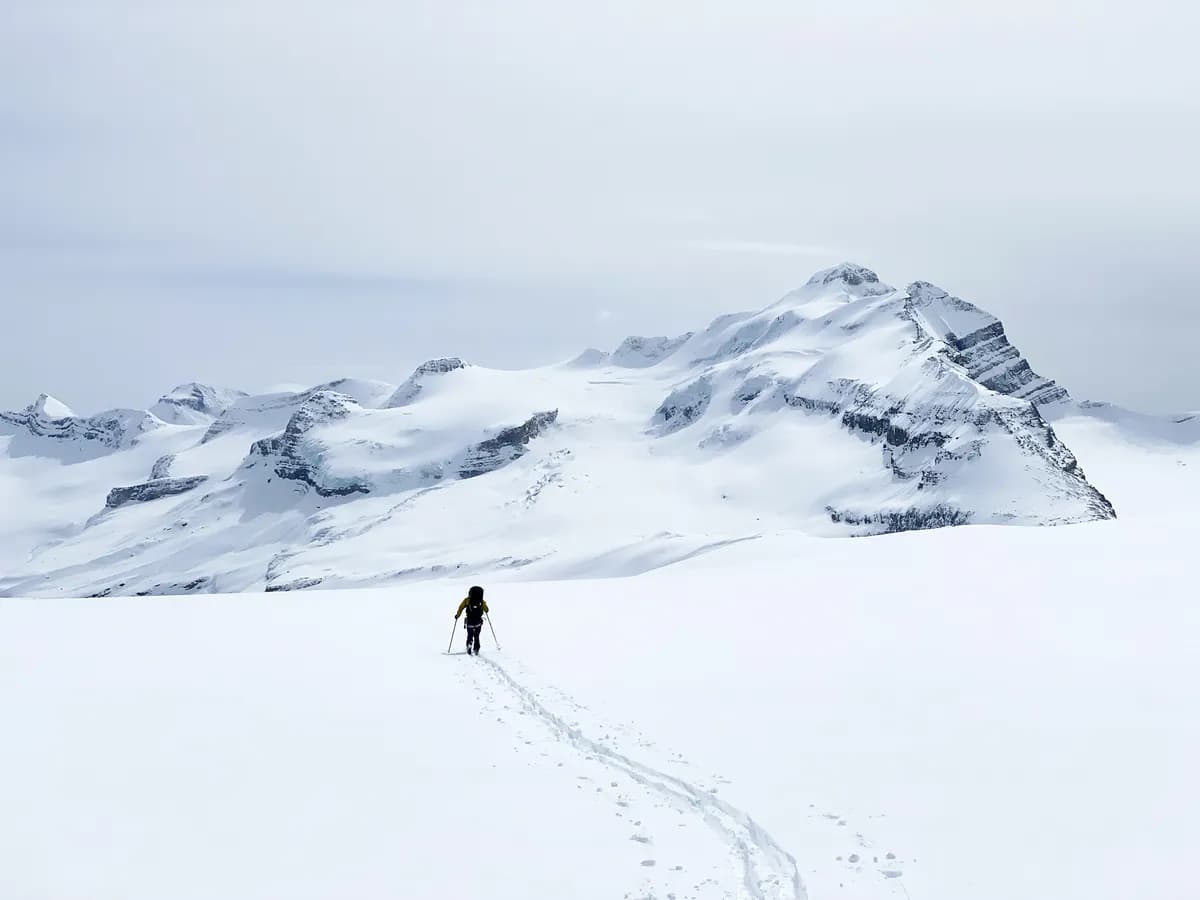
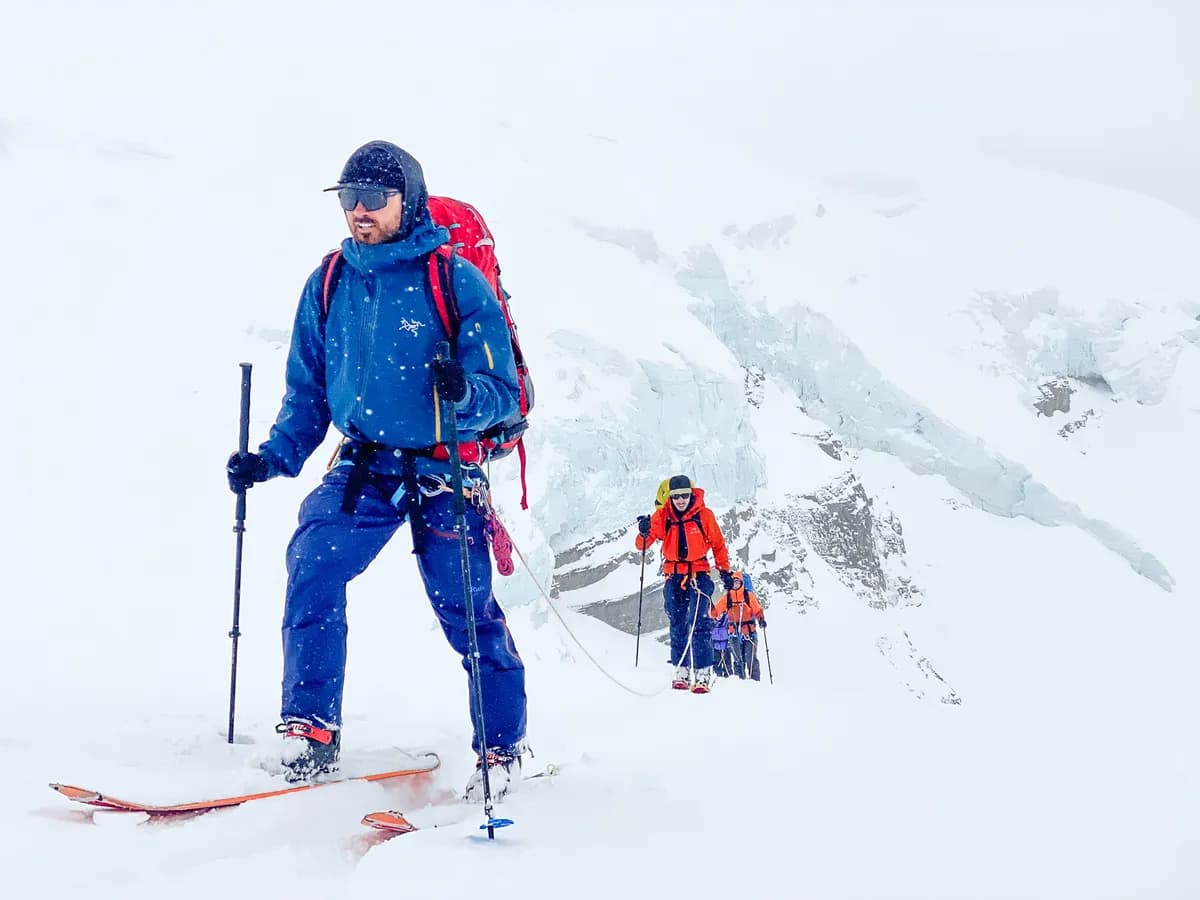
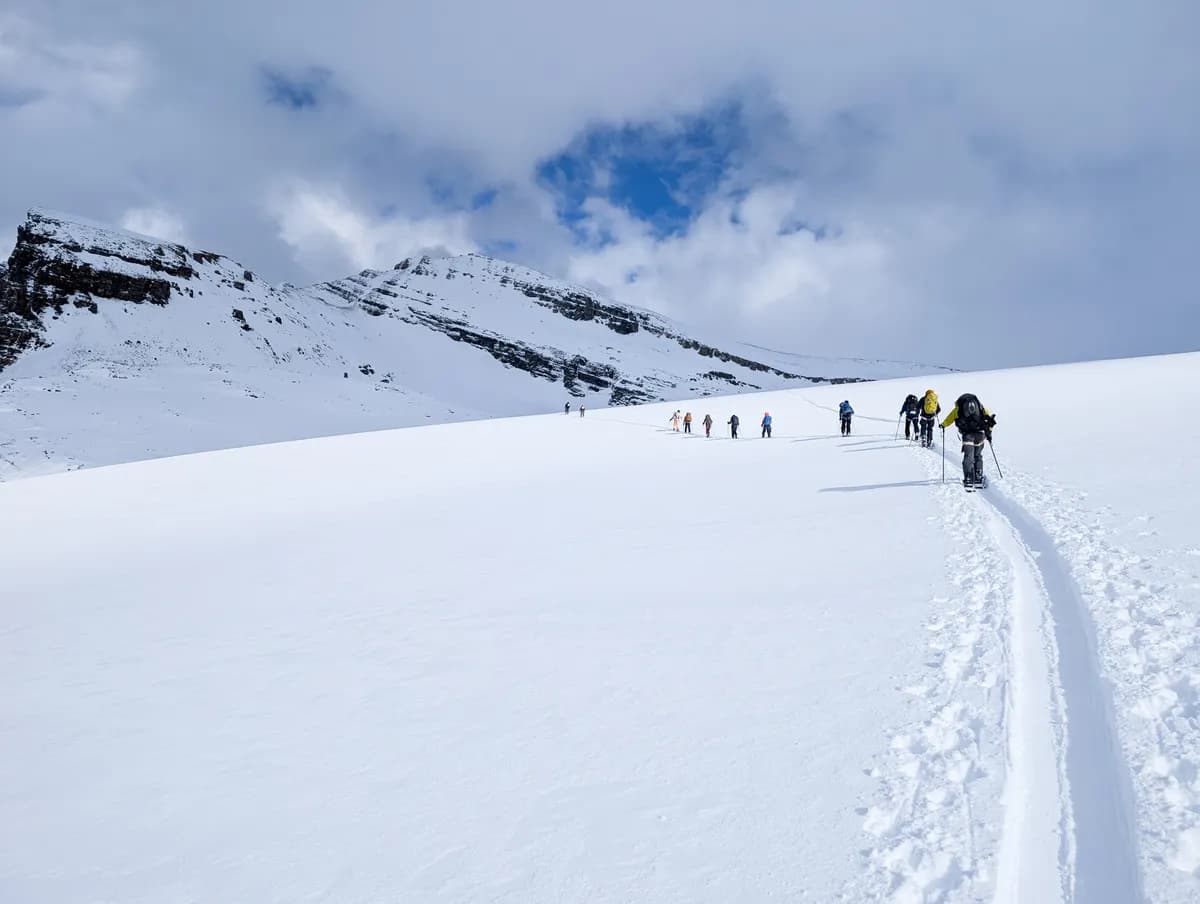
The classic Wapta Ski Traverse is one of North America’s great ski mountaineering journeys. The route runs roughly north-south across the broad expanse of the Wapta and Waputik Icefields, crossing the glaciated spine of the Continental Divide through the heart of the Canadian Rockies. Along the way the traverse links together a remarkable chain of Alpine Club of Canada huts, beginning near Peyto Lake and finishing below Sherbrooke Lake at the historic Great Divide Lodge.

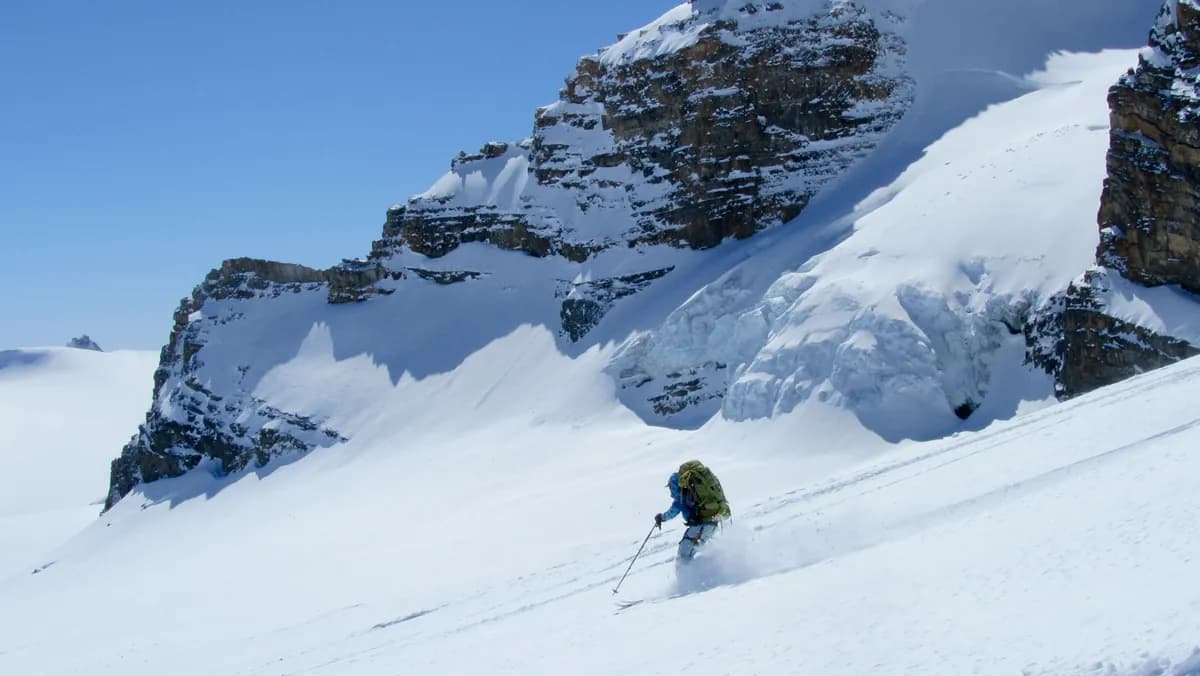
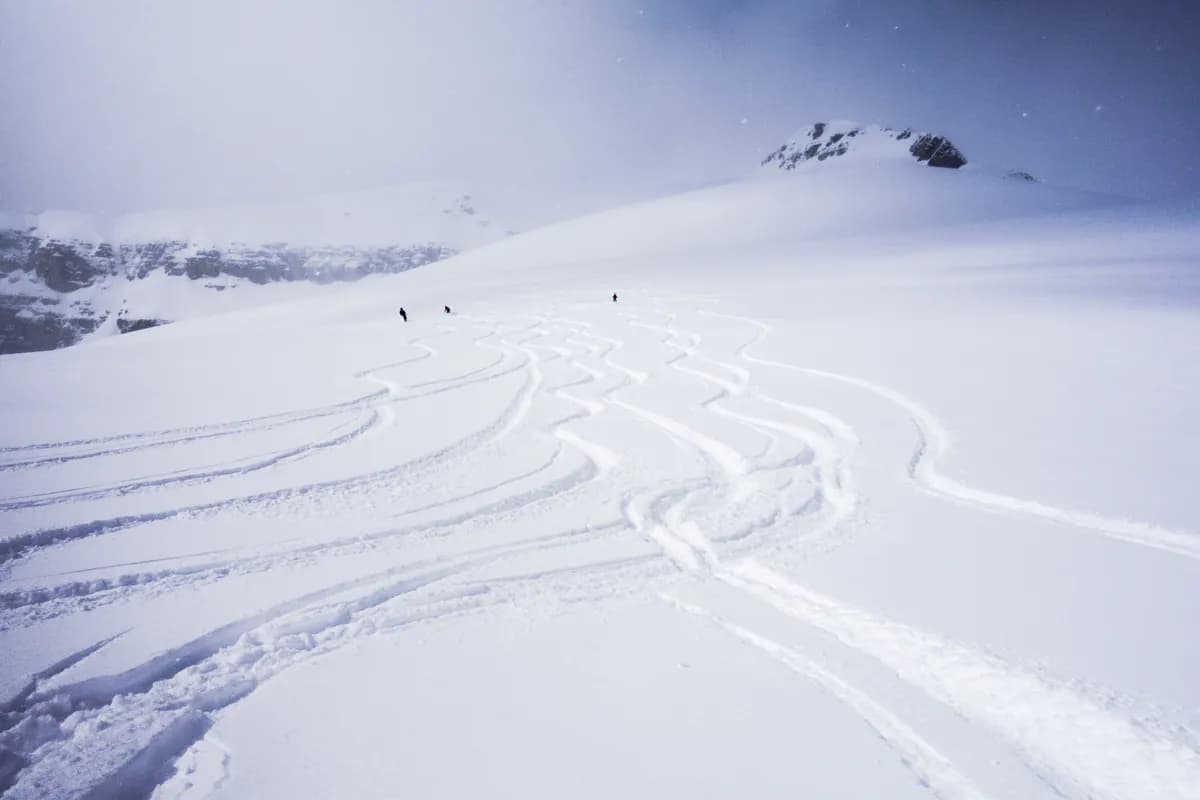
For decades the Wapta Traverse has earned a legendary reputation among ski mountaineers, and for good reason. Few trips combine such accessible glacier travel, spectacular alpine scenery, excellent hut infrastructure, and classic ski mountaineering terrain in a single itinerary. Long glacier descents, high cols, rolling icefields, and prominent summits create an ideal setting for both experienced backcountry skiers and developing ski mountaineers looking to expand their alpine experience.

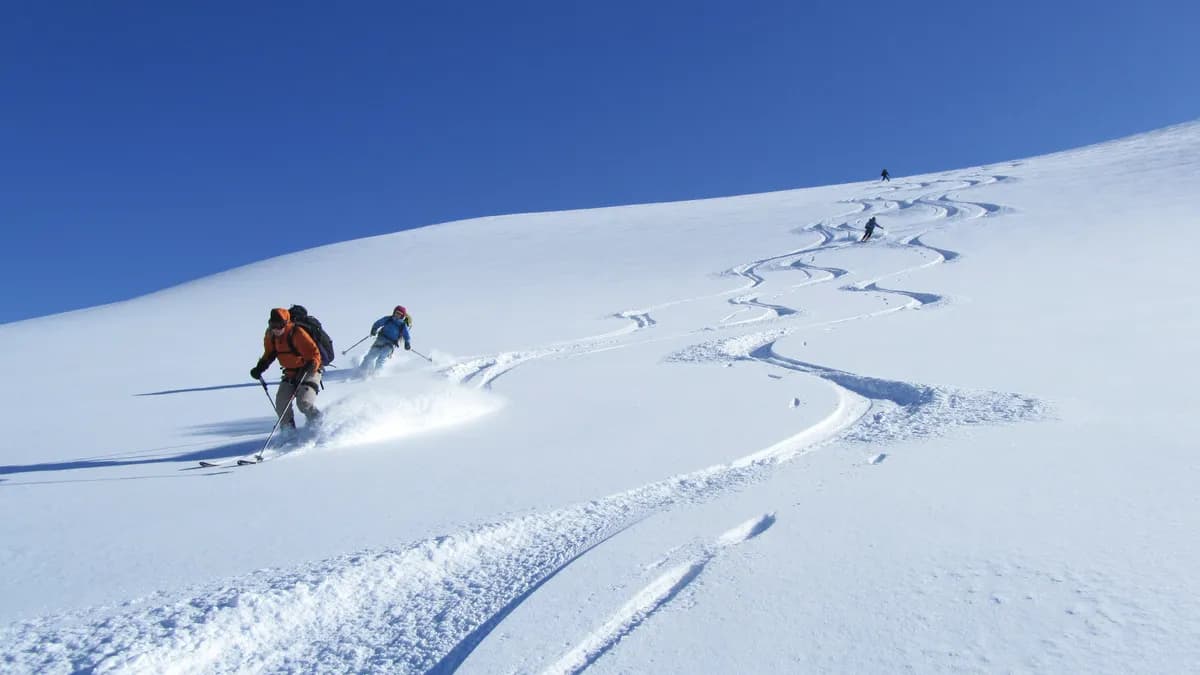
Late March through late April is generally considered the prime season for the Wapta. The snowpack is typically more settled and predictable while still offering the possibility of excellent powder skiing, winter conditions in the alpine, and increasingly long spring days.

Our trip begins in Field, British Columbia, where we meet at 6:30 pm on Day 1 at the Truffle Pigs Bistro. Dinner and hotel accommodation are included in the trip fee. The following morning we shuttle north to Peyto Lake where the traverse begins. Vehicle shuttle logistics are handled for you, allowing for a smooth point-to-point journey back to Field at the end of the trip.

This itinerary follows the classic Wapta Traverse but with an important refinement: a two-night stay at Peyto Hut. This allows more time to explore the exceptional ski mountaineering terrain surrounding the Waputik Icefield rather than simply rushing through the traverse. Excellent nearby objectives may include Peyto Peak, Mount Rhondda, and long glacier tours extending toward the Peyto Glacier headwall.

From Peyto Hut we continue southward across the icefields to Bow Hut and Balfour Hut before crossing the spectacular High Balfour Col onto the Scott Duncan Hut side of the divide. The final day exits via Sherbrooke Creek, completing a true classic of Canadian ski mountaineering.

Tour Image
Tour Image
Tour Image
Tour Image
Tour Image
Tour Image

locationMeeting place and time

Truffle Pigs Bistro & Lodge, Field, BC; 18:30

planePlace and time of the end of the trip

Truffle Pigs Bistro & Lodge, Field, BC; 16:00

Included

checkedhotel stay and restaurant meals in Field at the start of the trip

checkedguiding

checkedfood (excluding snacks and beverages)

checkedexclusive hut booking fees

checkedtransportation to/from Field and the trip start and finish locations

checkedporter service (food will be waiting at the first hut)

checkedgroup equipment

Excluded

canceledBeverages (you must bring your own tea, coffee & drink mixes

canceledsnacks (e.g. bars, trail mix, etc

canceledtransportation to Field

canceledpersonal gear

canceledski touring equipment

canceledtrip cancellation and evacuation insurance

bootsEquipment

PACKING NOTES

You need to bring all of the following personal equipment. Please don’t bring extra equipment. If you have any questions at all about gear please do not hesitate to contact us.

Ski crampons are a must for spring ski touring, and they can make a big difference even on a powder skiing week at times. If you have any difficulty obtaining these please let me know. We have some spares and can likely set you up with a pair. If you have telemark bindings, G3 crampons have an attachment system that works well for most tele bindings.

For specifics about the clothing and equipment, this illustrated equipment page might be helpful.

SKI MOUNTAINEERING GEAR

  • Skis, preferably with tech-style Alpine Touring (AT) bindings, 150-185 cm in length, wide (100 mm+ at waist) for powder skiing. Telemark, frame-style AT bindings, or splitboards are acceptable as well, please contact us if you plan to bring one or these alternate touring systems.
  • Ski crampons (mandatory; order these well in advance of the trip start date as they can be hard to come by, especially late season)
  • Climbing skins — check that the glue is fresh and sticky, especially along the edges
  • Ski Poles with powder baskets
  • Ski Boots
  • Harness – fitted for over your ski clothing (Black Diamond, Blue Ice, Cilao and Camp make the best lightweight ski touring harnesses)
  • 2 x Locking carabiners (mandatory) + 2 x non-locking biners (optional)
  • 1 x Prusik cord 5 metres long x 6 mm diameter
  • 1 x 120 cm sewn sling (optional)
  • Avalanche Transceiver – a modern digital unit
  • Collapsible Avalanche Probe (240+ cm, not lightweight!)
  • Avalanche Shovel (snow shovel designed for companion rescue with an extendible handle)
  • Backpack – at least 65 L, large enough for sleeping bag, spare clothes, and your share of group food & equipment. If you are a small person then you can get by with 55 L
  • Small emergency candle or small piece of glide wax (for skin icing)
  • Don’t bring a small daypack. It’s not necessary and just makes your big pack heavier

OTHER GEAR

  • Personal-sized hand sanitizer (mandatory)
  • Sunglasses and ski goggles
  • Water bottle — minimum 1 liter capacity, more if you don’t bring a thermos
  • Thermos for Hot Drinks, approx 750 mL (optional)
  • Sun block
  • Lip cream
  • Pocket knife and/or leatherman multi-tool (optional)
  • Sleeping Bag — we recommend a three season bag rated between -7 to -9°C. Bring a lightweight compression stuff sac so you have room in your pack for other things.
  • Headlamp with fresh batteries
  • Small Blister and personal first-aid kit
  • Camera (optional)
  • Personal toilet items (keep to a bare minimum)
  • 1 x Toilet paper roll
  • Large stuff sack (20L+) for carrying food
  • Small container for your lunch
  • Ear plugs for dorm sleeping (optional but recommended)
  • Booties or sandals (Crocs work really well)

CLOTHING

  • Long wool or synthetic (e.g. polyester or polypropylene) underwear (top & bottom)
  • Extra warm shirt (not cotton)
  • Medium weight fleece sweater
  • Soft shell or fleece jacket
  • Soft shell pants
  • Insulated jacket (down preferred)
  • Fleece or synthetic insulated pants — lightweight for April, heavier for Jan-early March
  • Waterproof jacket with hood — Gore-Tex or equivalent
  • Waterproof pants — Gore-Tex or equivalent, with side zippers
  • 3 pairs Wool or synthetic/blend socks
  • Wool or fleece hat (called a “toque” in Canada — rhymes with “kook”!)
  • Waterproof ski mountaineering gloves or mitts
  • Light weight ski gloves
  • Neck tube or balaclava
  • Sun hat

FOOD AND DRINKS

  • Quality food is provided for all meals (including the first dinner and breakfast at Truffle Pigs). Traversing meals are provided for an average to above average eater. Special diets may be accommodated for an additional fee, but also may not be possible; contact us for details. If you are an above average eater, or prefer special snacks, or like drink mixes (electrolyte, etc.) then please bring along a bit extra for your lunches. For reference, we provide one sandwich per day. There should be plenty of breakfast and dinner for everyone.
  • Beverages and liquor are not provided. If you want to bring alcohol on the trip then we do not recommened beer or wine as it’s heavy and bulky. One idea that’s popular: bring along a small bottle of Tequila with lime juice powder so you can make margeritas with the snow (we do provide snow in unlimited quantities). Many variations on the cocktail theme work well too! If you are a coffee or tea drinker be sure to bring enough to last you the whole trip. Likewise if you enjoy drink mixes (Gatorade etc.) be sure to bring that too.
  • Snacks are not provided. We do provide one sandwich per day for lunch. If you need more than that for your energy needs throughout the touring day please be sure to bring extras like trail mix, bars, pepperoni sticks, chocolate, candy, etc.

Your guide will bring all of the necessary group gear.

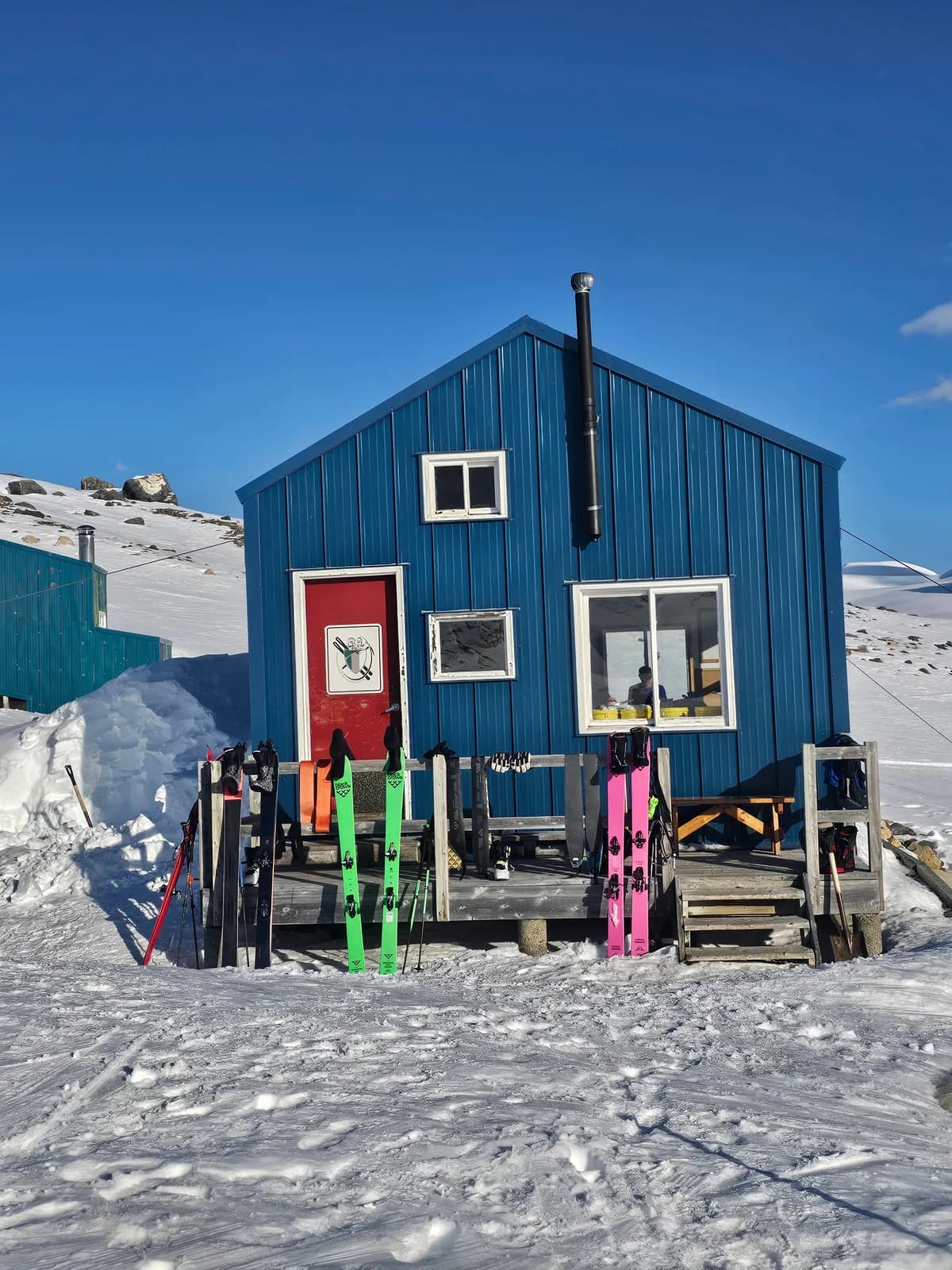
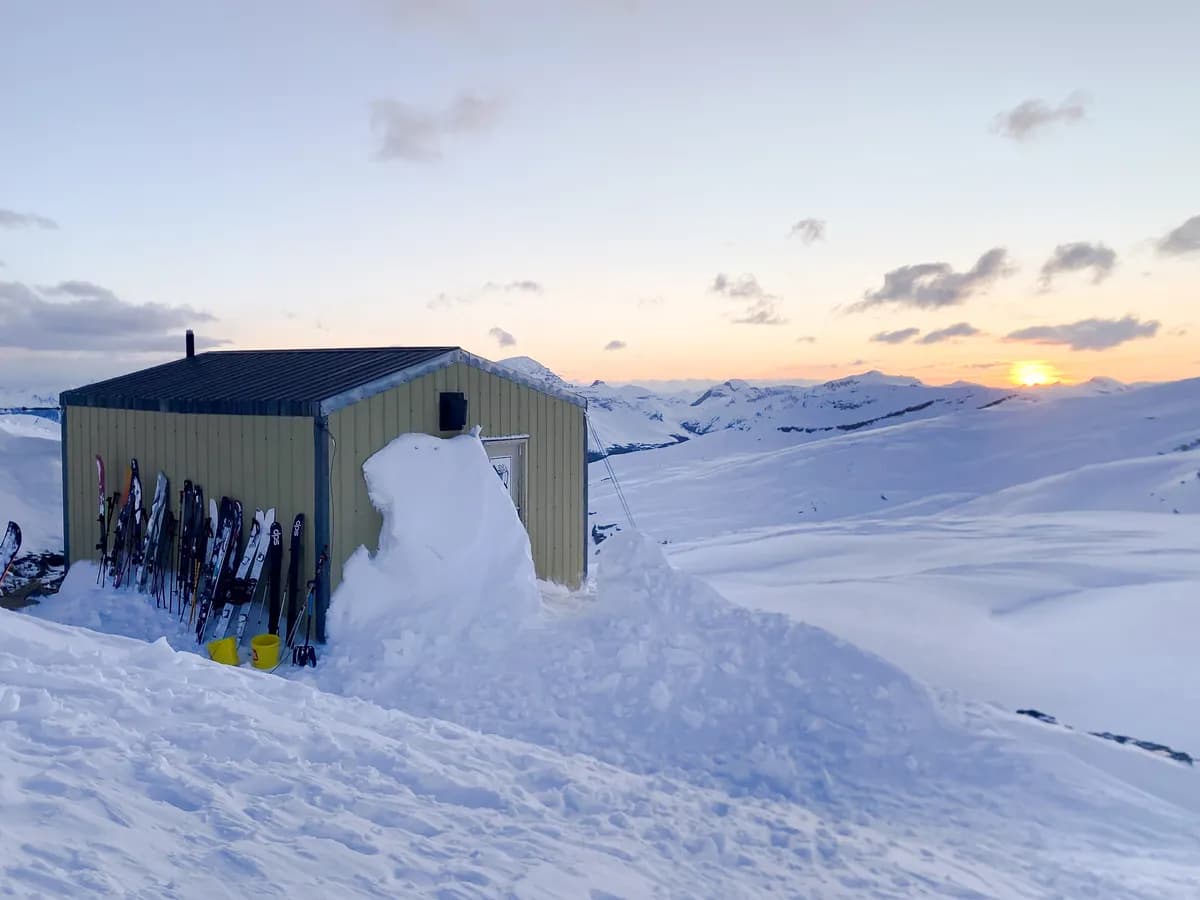
Hotel stay and restaurant meals at Truffle Pigs Lodge and Bistro in Field, BC. at the start of the trip. The traverse will be spent at three iconic Canadian Rockies high alpine huts. We book these huts exclusively, meaning just our group will occupy the huts during our traverse.

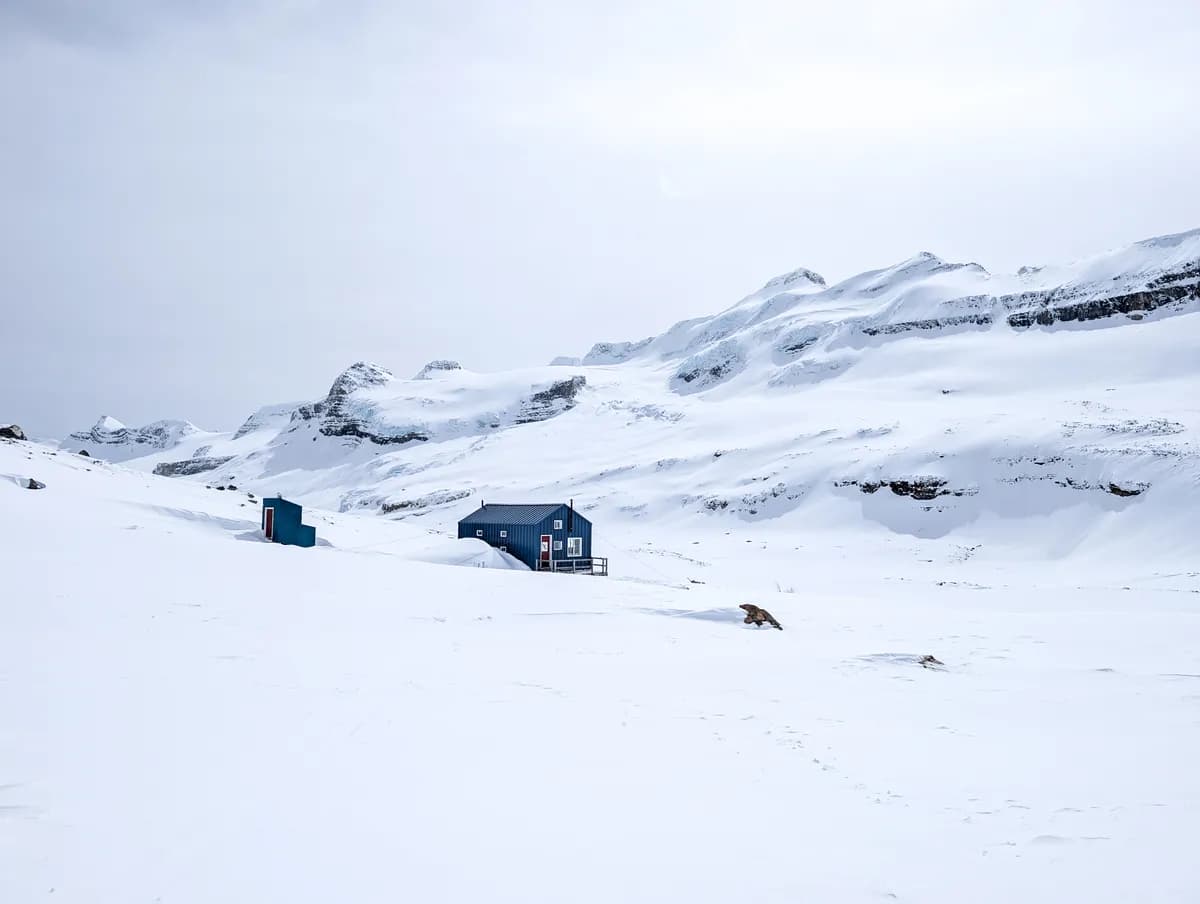
Peyto (Peter & Catharine Whyte) Hut - Perched at 2 660 m on a rock rib above the crevasse‑riven Peyto Glacier, the Peter and Catharine Whyte Hut—universally called Peyto Hut—marks the northern gateway to the classic Wapta Traverse. The steel‑clad shelter sleeps 18 in two‑tier plywood bunks, heated by a propane stove fed from exterior tanks that resist the most brutal Arctic outflows. Melt‑snow kitchen buckets, solar lighting, radios and a rudimentary library sit under corrugated arches salvaged from Columbia Icefield camps. From its doorstep skiers launch dawn patrols to Mount Thompson, Mount Rhondda and Mount Habel, or glide south towards Balfour.

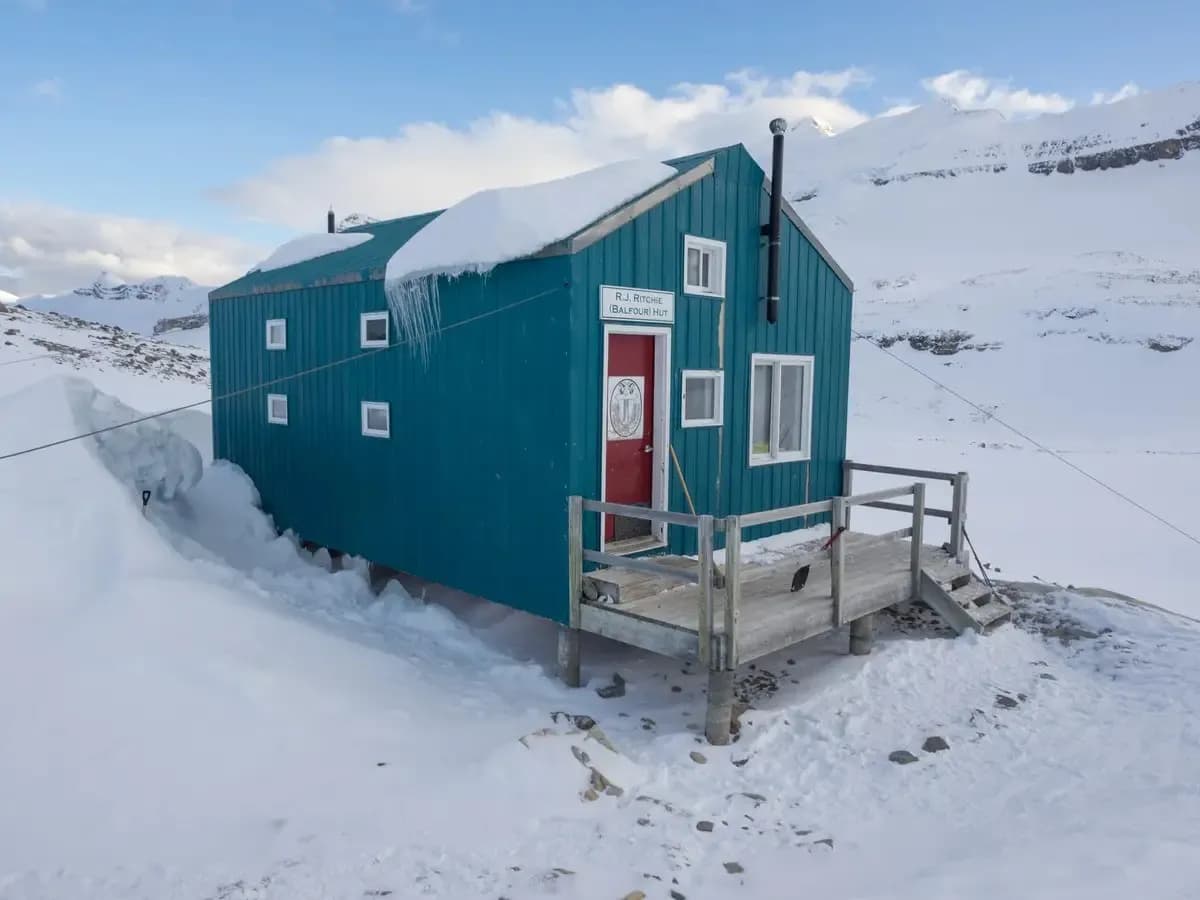
Balfour (R.J. Ritchie) Hut - Nestled at 2 470 m beneath the icefall tongue of Vulture Glacier, the R.J. Ritchie—better known as Balfour Hut—forms the critical midway refuge between Peyto and Scott Duncan on the traverse. Steel I‑beam portals and an anchored cable system lash the eight‑sided metal shell to its moraine perch, shrugging off katabatic winds funneled through Balfour Col. Inside, sixteen padded bunks, a two‑burner propane range, LED lanterns and ample snow‑melting pots keep parties efficient on frigid mornings. Shelves lines with provisions and water buckets line the plywood walls, and a south window frames the seracs of Mount Balfour that dictate the next day’s route decisions.

Scott Duncan Hut - Poised on a windswept shoulder of Mount Daly at 2 720 m, the Scott Duncan Hut is the traverse’s lofty terminus—often bathed in alpenglow while storm clouds swirl below. The square aluminum structure sleeps twelve on double‑deck platforms, its walls lined with reflective foil to trap the feeble warmth of a single propane heater. Water comes from a wind‑scoured snow quarry fifty metres away; visibility often demands roped travel just to fetch it. Yet the reward is a 270‑degree panorama from Daly Glacier to Niagara Peak, and sunrise descents down the broad south‑facing Daly Shoulder toward Sherbrooke Lake and civilization, for tired legs.

Accommodation image
Accommodation image

Program

Day 1Truffle Pigs Bistro & Lodge, Field, BC

Truffle Pigs Lodge, Field, British Columbia

6:30 pm – Introductions over dinner in Field, BC at the “Truffle Pigs Bistro” (dinner is included in your trip fees). In case you haven’t heard of it — this is one of the finest restaurants in the Canadian Rockies! After dinner it’s back to your rooms where your guide will pay you a brief visit for an equipment check and distribution of group gear and food.

Day 2Peyto Hut

Peyto Hut

7:00 am – breakfast is provided at the Truffle Pigs cafe. Bagged lunches will be provided by Kicking Horse Lodge. Make sure your backpacks and ski gear are packed and ready to go. 8:00 am – Drive to the trailhead at Peyto Lake. A shuttle will transport us to the trailhead — how’s that for service?! 10:00 – start skiing 17:00 – arrive at Peyto Hut. And — our food will be waiting for us, courtesy of our energetic portering staff! The ski from Peyto Lake to Peyto Hut takes anywhere from 5 to 8 hours depending on conditions and group speed.

Day 3-4Peyto Hut

Peyto Hut

The mountains around Peyto Hut provide excellent ski touring objectives. We will stay at the Peyto Hut an two days to enjoy the area!

Day 5Balfour Hut

Balfour Hut

The ski over to Balfour Hut is spectacular and typically brings us up and over the Olive-St. Nicholas Col. A relaxing hot lunch stop at Balfour Hut is followed by an afternoon ski objective like laps on the Diablaret Glacier.

Day 6Scott Duncan Hut

Scott Duncan Hut

The trip over the Balfour High Col is usually the highlight and crux of the trip. We’ll ascend over heavily crevassed terrain adjacent the stunning serac-fringed east face of Mt. Balfour. After attaining the col, if conditions permit, an ascent of one of the nearby peaks like Lilliput or even Balfour’s South Face is possible.

Day 7Truffle Pigs Bistro & Lodge, Field, BC

Trip Conclusion

All good things must come to an end. After a short run down from the Scott Duncan Hut it takes about 30 minutes of gentle climbing to come to the Shark’s Fin. From there it’s mostly downhill to get to the intersection of Niles and Sherbrooke Creeks where gurgling of spring snowmelt, birdsong, and the smell of spruce trees presents a sharp contrast with the alpine world we settled into during the trip. About five hours of travel in total brings us back to the highway and a shuttle to bring us back to Truffle Pigs. Expect to be back in Field for a late lunch, by 14:00 or so.

Will I have trouble carrying the heavy packs?

Ensure you come fit enough to carry your load. But we take measures to ensure your pack is as light as possible by hiring porters to carry your food up to the Bow Hut. Contact us directly if you have any concerns about your personal fitness to carry overnight packs of 20 kg.

When is the best time to do a Rockies ski traverse?

I've done Rockies traverses as early as October and as late as June. But the ideal months are February to early May.

February is a very special time to do a Rockies traverse. The light is cool and soft, and the powder snow is light and delicate. Crevasses are less filled, which demands careful routefinding, but this is easily enough accomplished by out experienced guides. Come prepared for temperatures as low as -30, but -15 to 0 C is more common.

March is a month of transition, with the snowpack stabilizing and days lengthening. This provides more options for peak bagging and steeper skiing. Come prepared for temperatures as low as -30, but -15 to 0 C is more common.

April is universally recognized as peak traverse season. Early April is likely to be a bit cooler and have powder skiing even on the solar aspects. The Rockies has a thinner snowpack than the Selkirks or Coast mountains, but by April and early May the snowpack tends to be robust and the crevasses well covered. Expect temperatures in the -10C to 0C range, but be prepared for lows as cold as -20C or highs up to +5C!

Is it possible to still do this trip with high avalanche hazard?

While rare, weather and avalanche conditions may make it impossible to continue or even start this trip. In that case the trip will be cancelled and an alternative trip will be offered. This might mean skiing into another hut, a town based program, or a combination of both. Any additional expenses (hotel, food, transportation) will be the responsibility of the participant. For those participants in the past who take out trip cancellation and interruption insurance, costs have been covered. If you self insured we remind you that there are no refunds possible (please see our Terms and Conditions for details).

Where can I park my vehicle and/or leave extra gear?

You can park your vehicle and leave extra gear at Truffle Pigs Lodge.

Wapta Traverse

from CA$2995

Guides

Christian Schlumpf

Christian Schlumpf

Mountain Guide IFMGA/ACMG

Christian has dual Canadian and Swiss citizenship. In his former life he completed a degree in Engineering Physics and worked for an engineering firm in Switzerland. It was there that he decided to change courses dramatically and become a mountain guide. He returned to Canada 10 years ago to pursue this dream and hasn’t looked back. Today, Christian is a fully certified Mountain Guide (ACMG/IFMGA) and one of Sawback’s Lead Ski Guides in 2024/25. This winter Christian will be in Japan, our Canadian Rockies Traverse trips (Wapta and Bow Yoho), Sunrise Lodge, and again in Svalbard.

Drew Nylen

Drew Nylen

Ski Guide ACMG

Drew Nylen is an ACMG-certified ski and trekking guide with deep roots in British Columbia and a passion for remote, wild terrain. He has guided extensively across the Canadian Rockies, Yukon, and Arctic, including dozens of first descents on Baffin Island. Drew splits his time between avalanche forecasting for Avalanche Canada and leading ski expeditions in places like East Greenland and the High Arctic. Known for his calm presence, technical expertise, and love of telemark skiing, Drew brings a rare blend of northern grit and thoughtful leadership to every trip. Together with his wife Emelie Gibeau, Drew co-owns and operates Diana Lake Lodge, a cozy backcountry retreat tucked into the Brisco Range near Kootenay National Park. The lodge is a hub for alpine touring, hiking, and quiet wilderness immersion — a reflection of their shared love for wild places and community connection

Mike Mariash

Mike Mariash

Ski Guide ACMG

Mike’s been a fully certified ski guide since 2008 and has worked all over British Columbia as well as guiding trips in Alaska, Japan and Chile. Mike cut his teeth skiing Marmot Basin in Jasper. While there he trained for competitive Mogul skiing. Mike is also trained as a ski instructor and is always happy to pass on helpful tips to improve his guests’ skiing experience. Revelstoke is his home base, and his winter work is a mix of heliskiing, ski tour guiding, and guiding ski traverses in the spring.

Gallery

Tour Image
Tour Image
Tour Image
Tour Image
Tour Image
Tour Image
Tour Image
Tour Image
Tour Image
Tour Image
Tour Image
Tour Image
Tour Image
Tour Image
Who is Sawback Alpine Adventures?

Sawback is owned and operated by Tom Wolfe, a professional mountain guide living in Canmore, Alberta. Sawback employs a number of other guides, all chosen for their expertise and experience in the mountains. See our Guides and Staff page.

Where are you located?

We are based in Canmore, Alberta. However, we run trips across Western Canada, and to many far flung and beautiful locations around the world. Some of our guides are based in Golden, British Columbia, along with other locations.

Can I do something that isn’t listed?

Absolutely. Please contact us to inquire about doing something that isn’t listed on our website. We are always keen to help organize custom trips. Apart from skiing, we can also organize and guide trips involving ice climbing, mountaineering, rock climbing, and hiking!

How much experience & fitness do I need?

It depends on the trip! We can accommodate total beginners on some, and there’s always the option of creating a custom trip. Many of our trips have more than 1 guide, which allows the group to be split to accommodate different levels. The difficulty of each trip is rated - see our Trip Rating page. Please feel free to contact us if you have any questions about your experience or fitness.

How are your guides trained?

All of our guides are certified by the ACMG (Association of Canadian Mountain Guides) and/or the IFMGA (International Federation of Mountain Guide Associations). These certifications represent the highest level of training in mountain / ski guiding and risk management in the world. Becoming fully certified as a mountain guide requires many years of experience skiing and climbing, before embarking in a rigorous training and exam process that takes between 4 to 8 years to complete.

Do participants have to sign a Waiver to participate?

Yes, all guests, or their parent or legal guardian for guests under 18, are required to review and agree to Sawback’s Release of Liability, Waiver of Claims, Assumption of Risk and Indemnity Agreement (the “Waiver”) as a condition of participating in any trip or activity with us and will apply to your participation in the trip. If the Waiver is not completed, the individual will not be permitted to participate. The Waiver will apply to all your activities with us for a period of 24 months from the date you sign it. By signing the Waiver, you will waive or give up certain legal rights, including the right to sue for negligence, breach of contract, or breach of the Occupiers Liability Act or claim compensation following an accident. The form of Waiver can be viewed and downloaded here. PLEASE READ THE WAIVER CAREFULLY PRIOR TO BOOKING ANY TRIP!

What Terms and Conditions Apply to my Booking?

Our Booking Terms & Conditions can be viewed here. When you book a trip, you are deemed to have accepted our Booking Terms & Conditions on behalf of yourself and all individuals who wish to participate in your booking. Our Booking Terms & Conditions contain important terms about the booking, including our payment and cancellation policies and waiver requirement. Please review these carefully before booking.

How safe are your trips?

Every trip in the mountains involves certain hazards and not all hazards can be mitigated or avoided. Our waiver outlines many of these. The safety of our guests is our absolute number one priority. Every day, the guide(s) on your trip will go through a formalized process to discuss and identify hazards, along with planning risk mitigation strategies. This process sets the stage for ongoing risk assessment through the day as new information is gathered. We strive to communicate this to our guests as much as feasible – a morning briefing about current conditions at a minimum. If you have any questions about safety at any point before or during your trip, please don’t hesitate to speak up!

Frequently asked questions

Didn't find an answer to your question?

Is there something you're uncertain about? Reach out to our welcoming team for assistance.

What Our Clients Say

Testimonials from customers who have already used our services.

Safety is a Forefront!

Tom guided our week at Burnie and provided the group with expert knowledge of the terrain and a superb week. Safety was always at the forefront of the decisions made and the group felt safe in his hands, along with his fellow guide for the week. Communication was excellent and professional. Would highly recommend and am looking forward to many future trips with Tom and Co.

client avatar
google

Tom Smith

You won’t regret it.....

Tom Wolfe and Svalbard, Norwegian Arctic on the Noorderlicht. I’ve done a few great trips with Tom over the years so when he emailed a year ago and asked if I wanted to go to the Arctic and ski from a steel hulled yacht I said yes without thinking... Good call. Svalbard was mind-boggling. I had expectations but it beat them. Getting into the zodiac everyday and skiing was amazing. Sea ice, glaciers, seals, walruses, beluga whales and polar bears. Huge huge glaciers, peaks as far as the eye can see. Just amazing scenery.

client avatar
google

Alan Johnson

Recommend without hesitation

I met Tom in April 2011 when we camped outside Fairy Meadow hut at the end of the N Selkirks traverse, he was guiding another group. Since meeting him I’ve done 3-4+ trips with him (Burnie, Sorceror, etc.) and found him to be one of the top guides I’ve had the pleasure to travel with over the last 20 years. I’m at that spot in life (almost 61) where I am getting slower and his daily trip planning does a good job accomodatiing the full range of abilities (even if some of still have lots of enthusiasm, but less stamina than in our 40"s) and still incorporates us as part of the group, not just some straggler OTB(off the back, an old cycling term). Safety conscious, good judgment and all around top notch & smart guy. Recommend without qualification.

client avatar
google

Jim Cossitt

Related tours

Bow Yoho Traverse tripView details about Bow Yoho Traverse trip

Bow Yoho Traverse

7 day(s)Canada

Bow-Yoho, Rockies

The spectacular Bow Yoho Traverse runs roughly north-east to south-west across the continental divide from Bow Lake to the Yoho Valley, crossing the Wapta, Yoho and Des Poilus icefields on the way. We take away a lot of the hard work and add a lot of fun to this classic Canadian Rockies hut to hut ski touring traverse. Porters bring our food into Bow and Stanley Mitchel huts, making for light packs and easy traverses. We will spend our days travelling and shredding March Powder. Nights we enjoy the comfort of three cozy Alpine Club huts that dot this high level traverse. There’s no sense in rushing this traverse, so we will spend two nights at the ACC’s new Guy Hut, a state of the art flagship hut perched on a high ridge between the Yoho and Des Poilus glaciers. Then we’ll spend our last two nights at one of the ACC’s quaintest and oldest huts, the log-built Stanley Mitchell, and warm ourselves to a crackling fire below the treeline. We have earned our reputation as the “Wapta Deluxe” experts!

Wapta Traverse tripView details about Wapta Traverse trip

Wapta Traverse

7 day(s)Canada

Wapta, Rockies

The classic Wapta Ski Traverse is one of North America’s great ski mountaineering journeys. The route runs roughly north-south across the broad expanse of the Wapta and Waputik Icefields, crossing the glaciated spine of the Continental Divide through the heart of the Canadian Rockies. Along the way the traverse links together a remarkable chain of Alpine Club of Canada huts, beginning near Peyto Lake and finishing below Sherbrooke Lake at the historic Great Divide Lodge.

For decades the Wapta Traverse has earned a legendary reputation among ski mountaineers, and for good reason. Few trips combine such accessible glacier travel, spectacular alpine scenery, excellent hut infrastructure, and classic ski mountaineering terrain in a single itinerary. Long glacier descents, high cols, rolling icefields, and prominent summits create an ideal setting for both experienced backcountry skiers and developing ski mountaineers looking to expand their alpine experience.

Late March through late April is generally considered the prime season for the Wapta. The snowpack is typically more settled and predictable while still offering the possibility of excellent powder skiing, winter conditions in the alpine, and increasingly long spring days.

Our trip begins in Field, British Columbia, where we meet at 6:30 pm on Day 1 at the Truffle Pigs Bistro. Dinner and hotel accommodation are included in the trip fee. The following morning we shuttle north to Peyto Lake where the traverse begins. Vehicle shuttle logistics are handled for you, allowing for a smooth point-to-point journey back to Field at the end of the trip.

This itinerary follows the classic Wapta Traverse but with an important refinement: a two-night stay at Peyto Hut. This allows more time to explore the exceptional ski mountaineering terrain surrounding the Waputik Icefield rather than simply rushing through the traverse. Excellent nearby objectives may include Peyto Peak, Mount Rhondda, and long glacier tours extending toward the Peyto Glacier headwall.

From Peyto Hut we continue southward across the icefields to Bow Hut and Balfour Hut before crossing the spectacular High Balfour Col onto the Scott Duncan Hut side of the divide. The final day exits via Sherbrooke Creek, completing a true classic of Canadian ski mountaineering.