
Mon Nov 16 2026Our Destinations
Skiing Antarctica
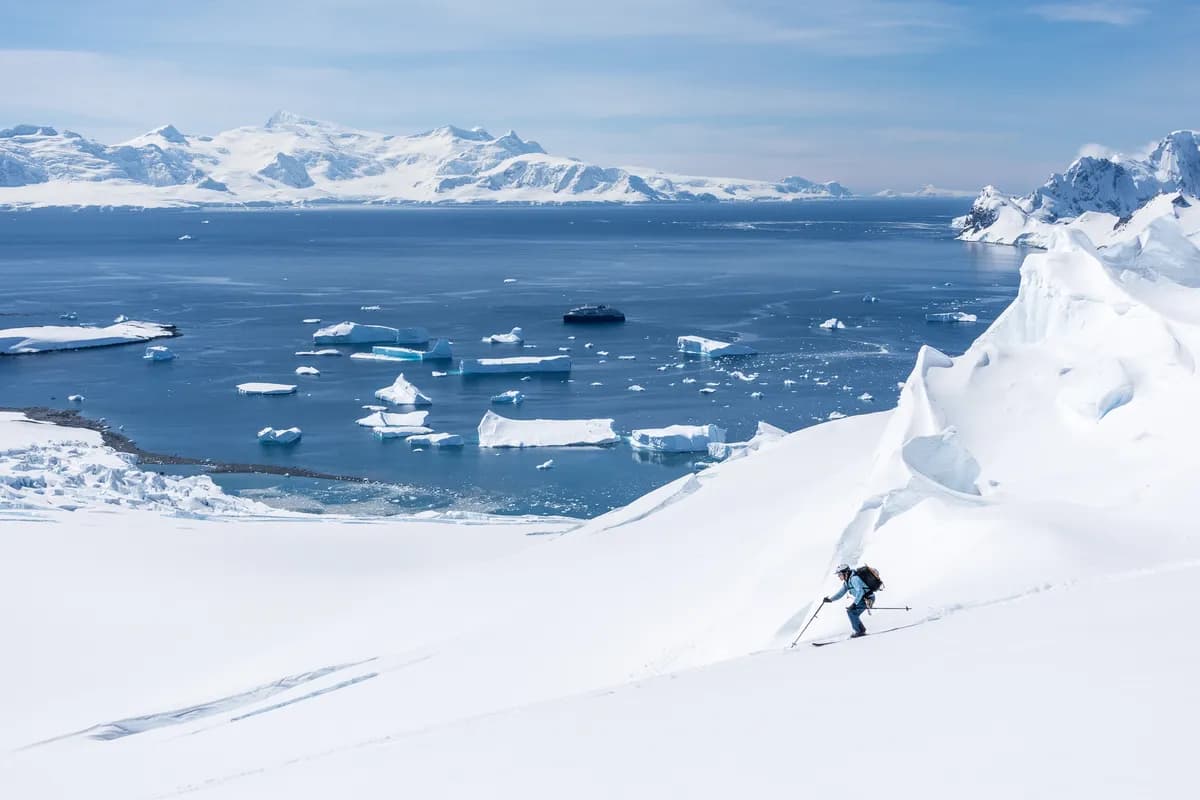
The author, George Walton, is from Salida, California. George is as passionate about Antarctica as we are, and has joined Sawback/Ski Antarctica on two Antarctica expeditions—soon to be three this December. We’re thankful that he was willing to share his experiences of sailing and ski touring in one of the wildest places on Earth.
A journey beyond words
The Antarctic Peninsula is as desolate as it is beautiful, as harsh as it is serene, as barren as it is filled with wildlife. Experiencing these contrasting qualities from the deck of a 64-foot sailboat, with ski touring day trips from the ship and a multi-day expedition on the ice, is beyond any words that can be written.
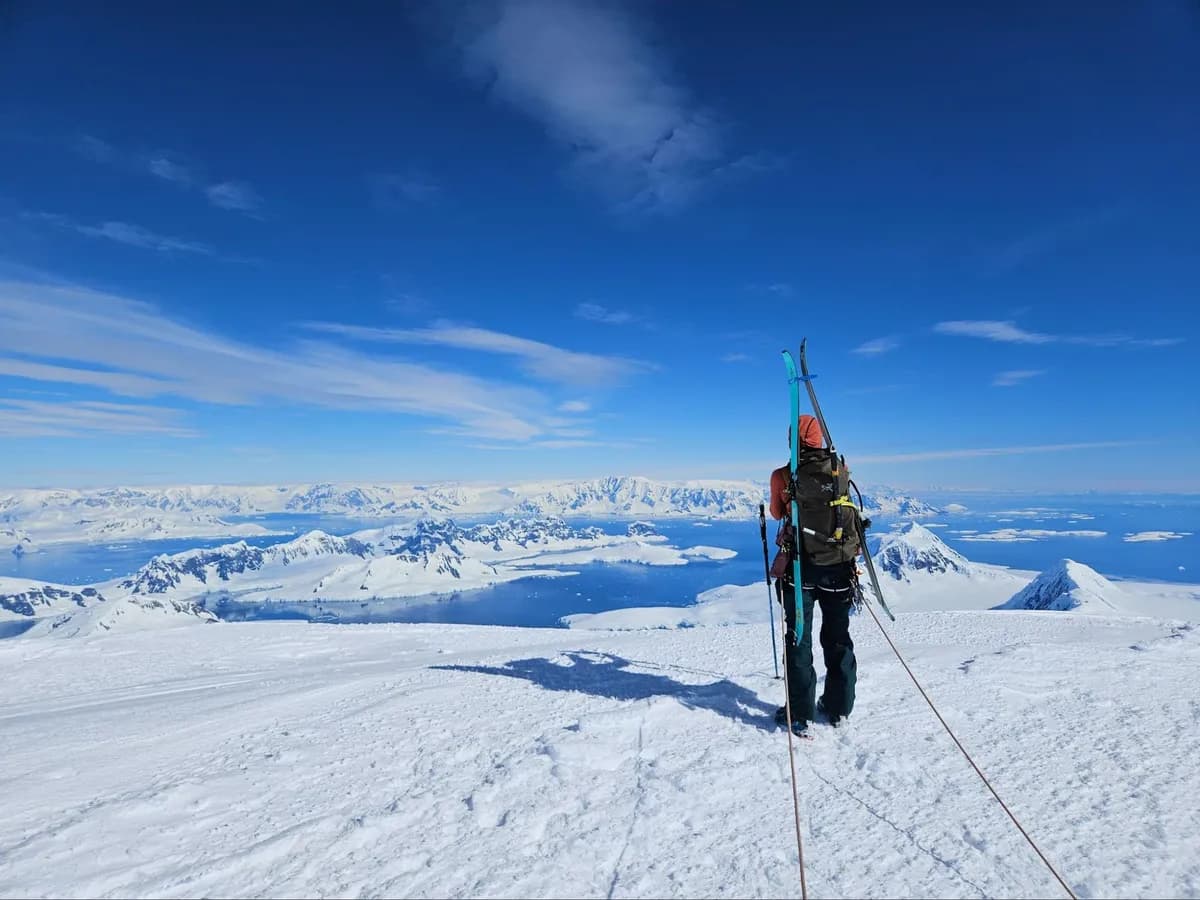
An unforgettable perspective of Antarctica. Photo: Sawback Alpine Adventures
A typical trip with Sawback Alpine Adventures and Ski Antarctica starts with the better part of a week in Ushuaia, the capital of Tierra del Fuego, followed by an adventurous four-to-five-day crossing of the Drake Passage by sail. We then take about three weeks in the Gerlache Strait, with its numerous moorings and ski objectives providing the opportunity to settle into the environment and a daily routine.
White ice, black rock, blue and grey water surround us. And in the ice, every shade of blue imaginable. The topography is stunning. Sheer rock topped and flanked by impossibly balanced seracs. The icefalls and ice walls near the shore are from another dimension. Tortured rivers of ice flow beneath laminar sheets of ice on top. And these views are everywhere you look. Then there’s the seabird and marine mammal life—almost constant companions in this otherworldly landscape.
Welcome to the Antarctic Peninsula. And we’re going to explore this incredible place on skis. But first, we have to get there.
The journey starts in the city of Ushuaia, Argentina
Located on the north bank of the Beagle Channel at about 54° 45’ south, Ushuaia has served, and continues to serve, as a primary embarkation port for Antarctica and the Southern Ocean. With a population of about 85,000, the town has rich historical, natural and cultural underpinnings with many connections to Antarctic exploration.
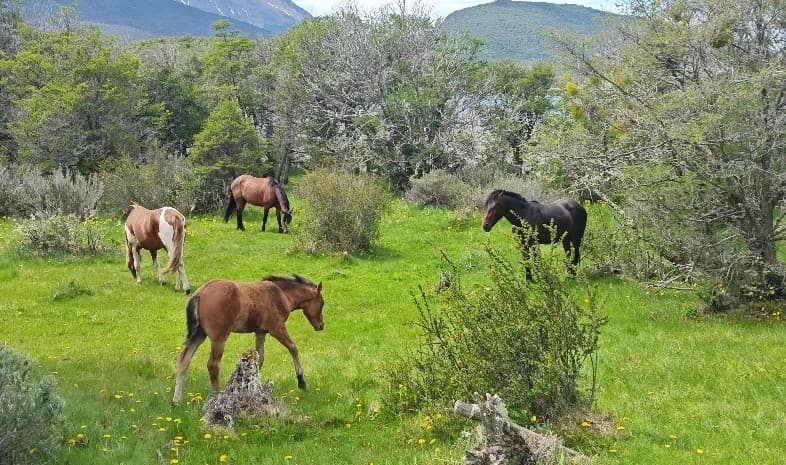
Wild horses in Parque Nacional Tierra Del Fuego. Photo: George Walton
The group spends about four days in Ushuaia ski touring on the Martial Glacier, hiking in the national park west of town or the mountains to the east, doing some dryland training and generally getting to know each other. Group dinners provide a great opportunity to sample the local fare and settle in with the other adventurers.
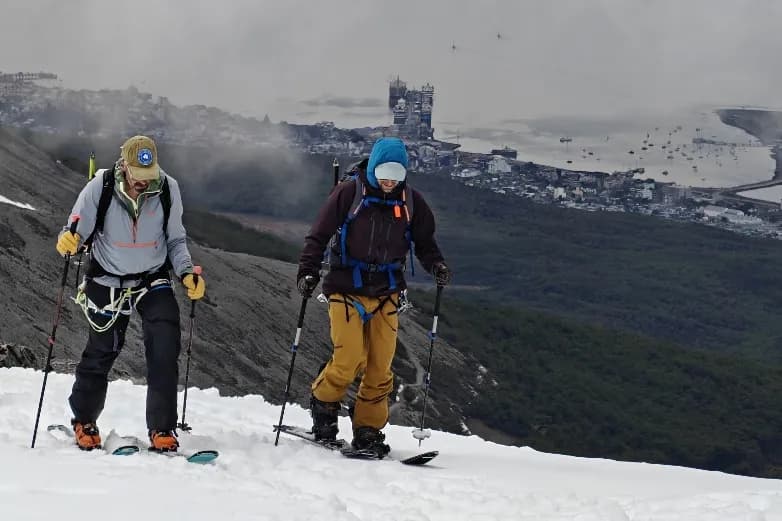
George and Damien ensure all their systems are ready for Antarctica while touring on the Martial Glacier near Ushuaia. Photo: Anik Mercure
On the last day in Ushuaia, we board the Ocean Tramp, a 64-foot, ketch-rigged high latitude sailing yacht with a layout that’s well suited for high latitude voyaging and carrying a bunch of skiers across the Drake Passage.
The Drake is formed by two constrictions of land—Cape Horn of South America and the Antarctic Peninsula. At its shortest distance the crossing is about 530 nautical miles, or about 9° of latitude. After shoving off from Ushuaia, the trip down the Beagle Channel takes about eight hours and provides everyone a chance to settle into their cabins, meet the crew (the skipper, the first mate, and the beloved cook) and get comfortable being at sea.
The trip down the Beagle also provides the crew a buffer to slow down or speed up depending on the forecast for the crossing. Low pressures spin clockwise in the Southern Hemisphere, and the hope is to catch the front edge of a moderate low pressure and enjoy fair winds and following seas during the approximately four-day crossing.
Crossing the Drake Passage to Antarctica
All are assigned to a watch duty schedule led by a crew member or guide. Though life on board during the crossing is fairly spartan, plenty of snacks are available and some light meals will come out of the kitchen if the seas are mild and appetites are up. The group falls into living nine-hour days—three hours on watch, six hours off, three hours back on…
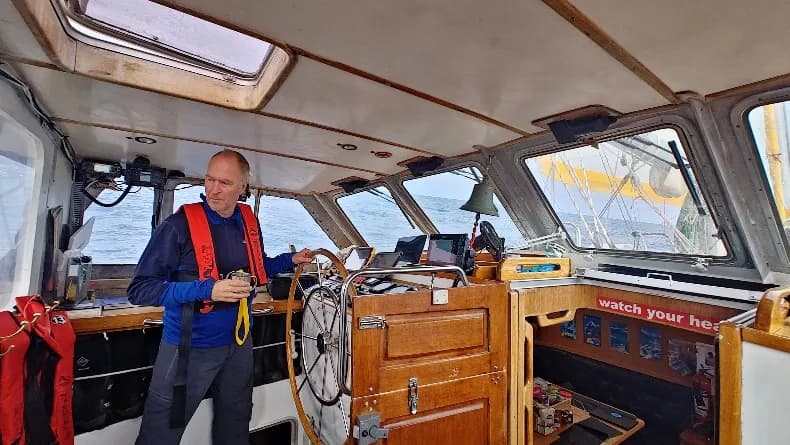
In the pilothouse of the Ocean Tramp, with legendary Antarctic explorer Phil Wickens of Ski Antarctica at the helm. Photo: George Walton
During watch is a great time to learn about the ship, the place and the people you’re with. In the off hours, there’s time to have something light to eat, stow and organize your personal effects (most of your gear is safely packed away during the crossing), and contemplate the fact that you’re traveling to a place of profound beauty that few get the chance to experience. Did I mention we’re going to ski there?
Seabirds often join us and stay with the ship for miles on end during the first part of the crossing. About halfway through the voyage, we cross the Polar Convergence. One of the largest natural boundaries on earth, the convergence is a near-vertical barrier in the ocean that separates oceanic currents. The warmer northern currents come from the Pacific, Atlantic and Indian Oceans, while the much colder southern current flows endlessly in a circle around the White Continent. The change is quite striking and quick. The air temperature drops noticeably, a fog may form and the seabirds tend to disappear.
This is also in the vicinity at which we cross into the area governed by the Antarctic Treaty at 60° south. Having sailed so far, another phenomenon begins to show itself. The hours of daylight are getting much longer, and by the time we get to the Peninsula there will be about 21 hours of daylight and three hours of twilight. With clear skies, you’ll be able to see the Southern Cross during night watches before the daylight takes over. The crossing is truly an experience in itself.
Through the ice to the Antarctic Peninsula
Land! But first, icebergs and growlers!
About a day out from seeing land, watch duty becomes a little more concentrated. Growlers are smaller, ranging from about the size of a car to that of a house. Icebergs, in contrast, are larger and generally easy to see in fair weather. Some will be tabular in form, having broken off an ice shelf, and some will be more mountainous in shape. Awe is the only word that comes close, both in their sheer size and majesty. A diligent watch crew always has at least one set of eyes scanning the way ahead at all times.
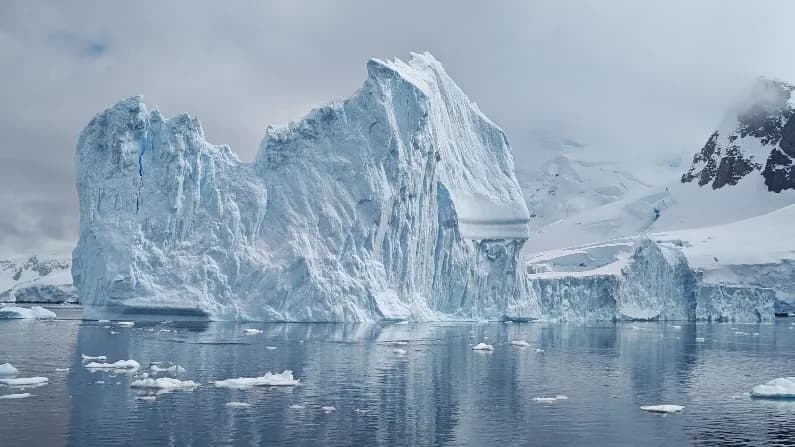
Ice in Paradise Harbour on the west side of the Antarctic Peninsula. Photo: George Walton
After about four and a half days of sailing, we make our first mooring. Depending on the conditions and location, the Ocean Tramp will sometimes swing on a single anchor in a protected cove, and sometimes run out stern lines to shore that are fixed around large rocks. Whether you’re on deck helping spool out the lines or in the Zodiac setting the anchors, the sense of arriving at your destination is huge. You’re in Antarctica! The galley is in full swing, and it’s time to settle into the routine of ski touring from the ship and enjoying the occasional sea kayaking venture.
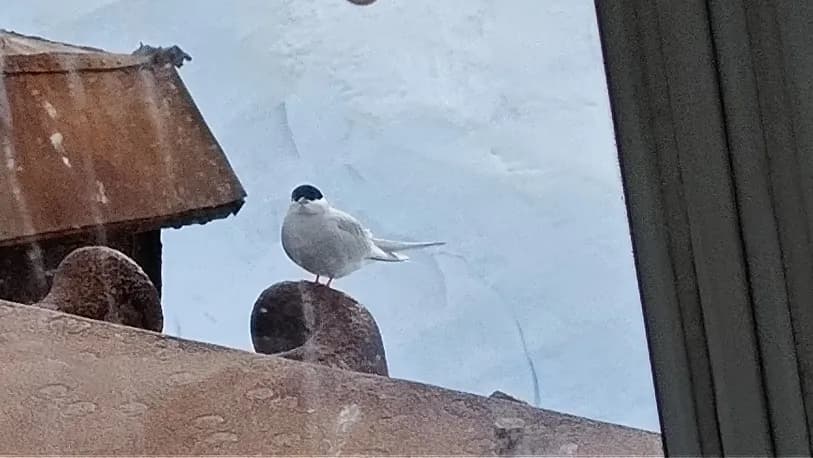
A white-fronted tern at Enterprise Island. Photo: George Walton
Skis, packs and boot shells have a place on deck in the spare dinghy or in the lazarette. You become accustomed to what you need to take below for the night and the best way to get ready in the morning. There’s perpetual daylight or twilight, and the pace of each day is comfortable.
A typical day of ski touring in Antarctica
A typical ski day includes breakfast about 7:30 or 8:00 in the morning, with a briefing on the day’s tour and the first Zodiac leaving for shore about 9:30. The first boat scouts and secures a landing and usually takes all the skis, poles and ice axes. The second boat brings the remaining skiers and their packs.
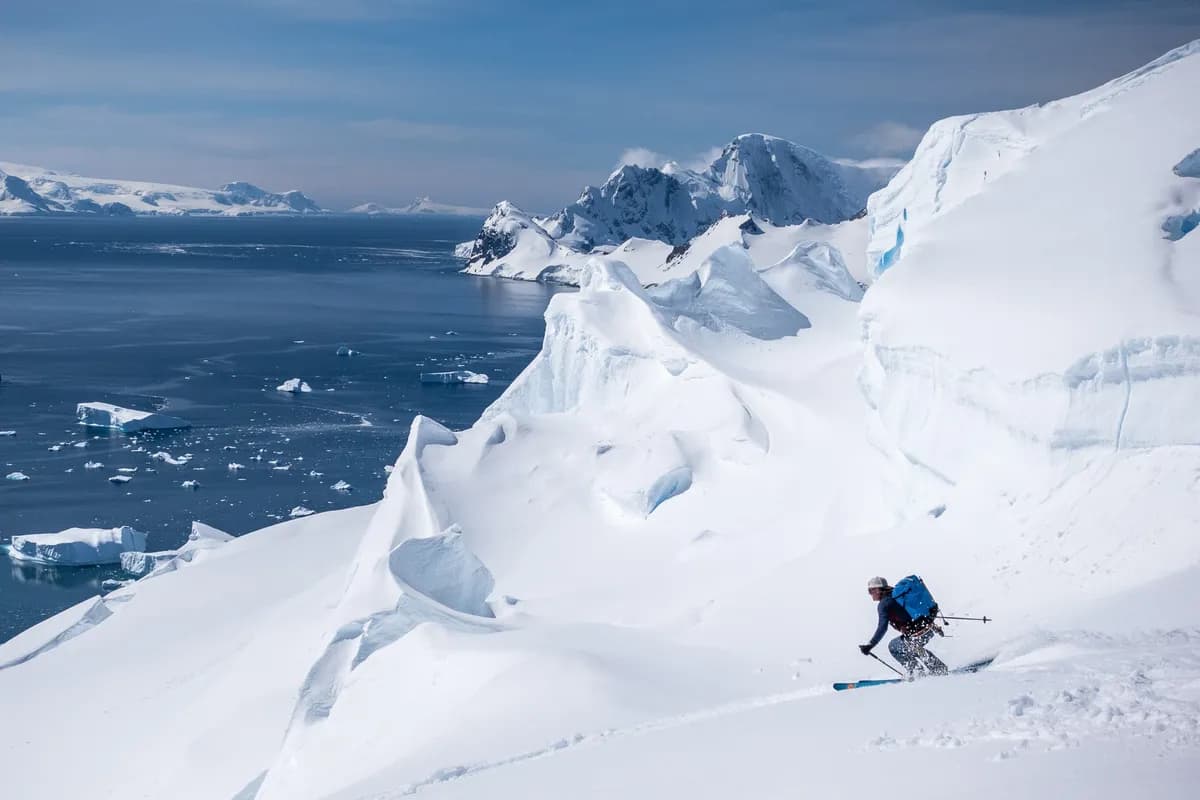
Francois Brissette skiing in Antarctica, loving the turns on the descent towards the sea. Photo: Sawback Alpine Adventures
The terrain on the Peninsula provides everything from a flat approach for a mile or so to climbing straight from the shore. Everywhere you look are phenomenal views of ice, rock and water.
An abundance of wildlife
Penguins commonly swim by as you're getting ready to ski or waiting for the Zodiac. Seabirds are everywhere, and the occasional seal or group of seals will be lounging nearby. Every once in a while, someone will say, “There’s a whale!”
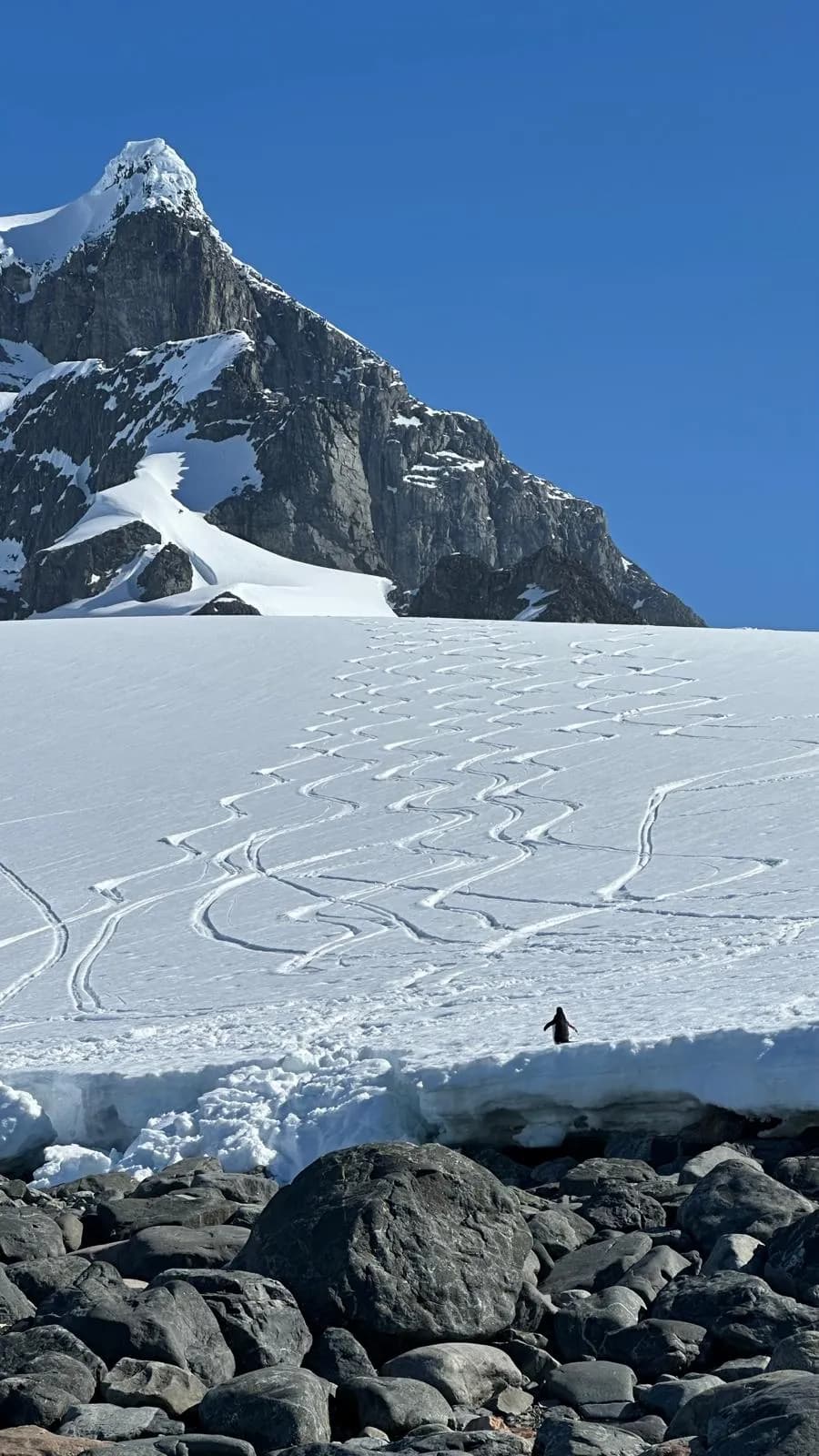
A curious penguin checking out the tracks. Photo: Anik Mercure
One afternoon while we waited for our pickup, a seal slowly drifted by on a growler being carried by the current. The animal wasn’t more than 10 feet offshore. The abundance of wildlife makes such a beautifully distant and desolate place so much more beautiful. Antarctica is truly on another level of reality.
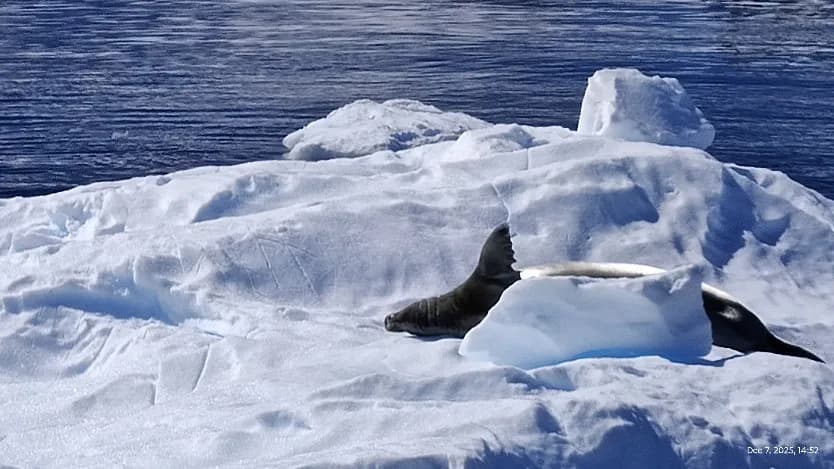
A seal floating by on a growler as a ski group waits for pickup. Photo: George Walton
Carving snow over a base of ancient ice
The climbs reveal crevasses and other formations to account for on the ski down, some of which are absolutely breathtaking. And the terrain is so varied that each day could include a gentle approach climb, a steady ascent and a bootpack of a steep section. The snow is typically a couple inches of soft, maybe a little wind-affected, but totally carveable snow on a base of ancient ice. Spring corn can be found on the northern aspects. Yep. For us Northern Hemisphere folks, it’s weird to feel the heat from the north!
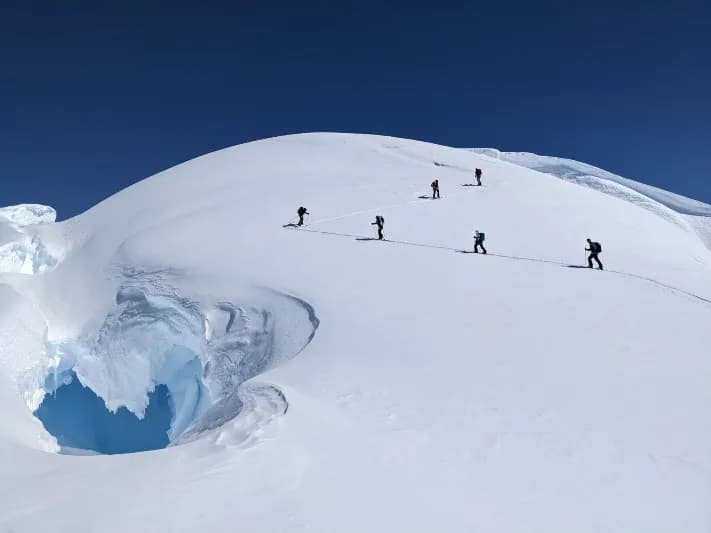
A group skinning up Mount Rojas before enjoying fresh lines back down. Photo: Carl Stewart
The return to ship at the end of the day is basically the reverse of the morning. The first boat stores the skis and poles, and once everyone is back aboard a wonderful après ski comes out of the galley. Dinner is at about 7:30, and a briefing on what’s planned for tomorrow follows.
Touring from the Ocean Tramp is a true expedition. Everything that happens is based on weather, ice conditions and short-term forecasts. Things can change quickly and flexibility is a must. Sea kayaking and shore trips to historic and natural formations like calving glaciers round out the experience. And sailing days en route to the next objective provide hours of watching an incomprehensible variety of ice formations, icebergs and wildlife glide by.
Deeper into the wild with a multi-day, land-based exploration.
At some point a period of several days of high pressure is forecast, and it’s time to start thinking about a land-based expedition that heads deeper into the wilds of Antarctica and leaves the boat behind. The objective will be identified based on weather forecasts and the strengths of the group. We travel with everything we need to navigate through all types of terrain and weather, hauling all of our food, gear and tents behind us to our base camp (or multiple camps) with a simple, low-friction system.
A trip with a shorter approach to a single base camp that we ski from each day provides an opportunity for touring in the morning before potentially taking it easy around camp in the afternoon or doing a second ski on the soft afternoon corn snow. Trips with a multi-day approach to a remote base camp with big objectives and high altitudes are challenging and fun with a strong group.

The empty beauty of Bryde Island, with base camp in the distance far below. Photo: George Walton
An unforgettable place, and an easy return
As the days turn into weeks, it’s time to start thinking about making for King George Island in the South Shetlands for the flight back to the mainland. Day tours off the boat continue as we ply our way to the northeast. We’ll set anchor near King George and, the next morning, board a large charter airplane that takes off from a dirt runway as we enjoy an easy, three-hour flight back to the Chilean mainland.
The closing hours on the ship and the flight north give all a chance to soak in what the last three weeks has offered, the friendships forged in the setting of a wild and beautiful place, and how fortunate we are to have this fleeting time on earth.